How to Calculate Your Effective Annual Fee (With Real Examples)
Your real annual fee = listed fee minus credits used. Learn the formula and see it applied to 10 popular premium cards.

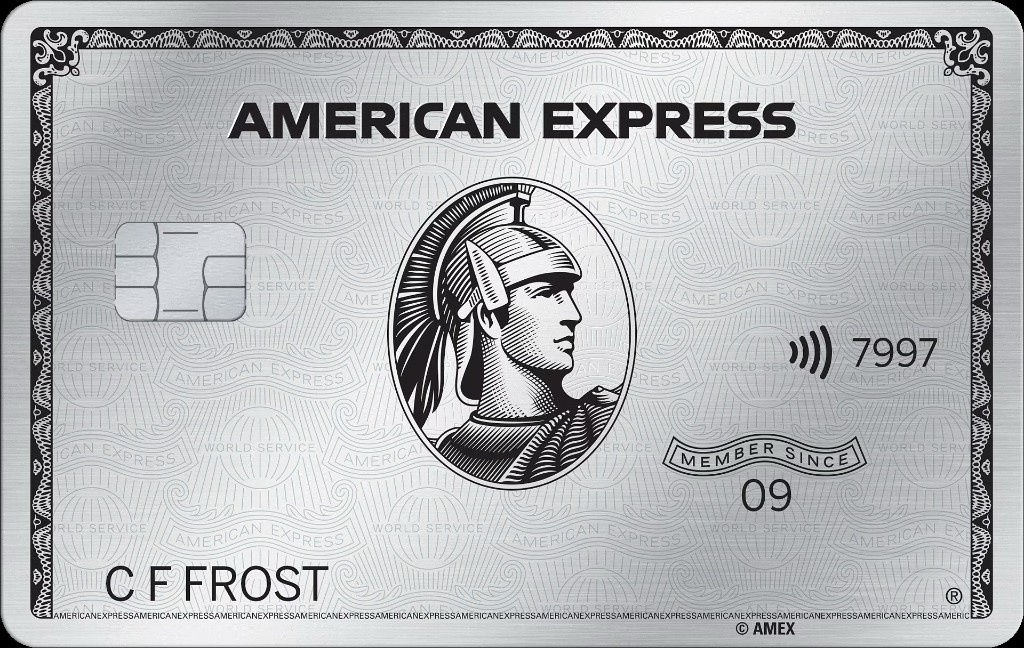
Every credit card issuer advertises a list of credits and perks designed to make the annual fee look smaller than it is. Amex says the Platinum offers over $3,000 in statement credits. Chase says the Sapphire Reserve’s $300 travel credit is the anchor of a much larger credit stack on a $795 card.
These numbers are not wrong. They are just not your numbers. Your effective annual fee depends on which credits you actually use, not which ones exist on a marketing page.
Here is the formula, how to apply it honestly, and what it looks like for the most popular premium cards.
TL;DR
- Effective annual fee = listed annual fee – credits you actually use
- Ignore the issuer’s “total value” number — it assumes you use every credit at full face value
- A card with a $895 fee can have an effective fee of $0 or less if you use enough credits
- A card with a $795 fee can have an effective fee of $795 if you do not use its credits
- Calculate this once a year to decide whether each card is worth keeping
The Formula
It is straightforward:
Effective Annual Fee = Listed Annual Fee − Credits Actually Used
Not credits available. Not credits the issuer advertises. Credits you personally redeemed in the past 12 months (or would realistically redeem in the next 12).
Some people add a second layer:
Net Annual Cost = Effective Annual Fee − Value of Non-Credit Benefits Used
Non-credit benefits include things like lounge access, hotel status, travel insurance, purchase protection, and Global Entry/TSA PreCheck credits. These are harder to assign a dollar value to, but they are real. If you use Centurion Lounges 10 times a year and each visit replaces a $30 airport meal, that is $300 in tangible value.
For this article, we will focus primarily on the credit-based calculation since those have clear dollar values.
Why the Issuer’s Number Is Misleading
Amex advertises a long list of statement credits on the Platinum. The active list in our credit reference totals $2,984 per year after the Saks credit ended — if you max out every active credit at full value.
The problem:
- Not everyone shops at Lululemon ($300 in potential value that is $0 for many people)
- Not everyone pays for Equinox ($300 that could be worthless)
- Not everyone lives near a CLEAR airport ($209 that could be worthless)
- The Oura Ring credit is a one-time purchase — if you already have one, the credit may not trigger again
- The airline fee credit is hard to fully use now that the gift card loophole is closed
The $2,984 number is the theoretical ceiling for current active credits. Your effective fee is based on the realistic minimum — what you would actually spend money on regardless of whether the credit existed.
A useful test: would you have spent this money anyway? If yes, the credit has full face value. If the credit is causing you to buy something you would not otherwise buy, the real value is whatever enjoyment you get from the purchase, not the face value of the credit.
Worked Examples
Amex Platinum — $895 Annual Fee
Credits available: $2,984
| Credit | Available | Realistic Use | Notes |
|---|---|---|---|
| Hotel (FHR/THC) | $600 | $600 | 2 hotel stays/year is reasonable for a traveler |
| Resy Dining | $400 | $400 | Easy in most US cities |
| Digital Entertainment | $300 | $300 | Autopilot for streaming subscribers |
| Equinox | $300 | $0 | Do not pay for Equinox |
| Uber Cash | $200 | $200 | Monthly rides or Eats orders |
| Airline Fee | $200 | $100 | Hard to fully use without gift card trick |
| Uber One | $120 | $120 | If you use Uber regularly |
| Walmart+ | $155 | $100 | Depends on Walmart usage |
| Saks | $0 | $0 | Benefit ended June 30, 2026 |
| Lululemon | $300 | $0 | Do not shop there |
| Oura Ring | $200 | $0 | Already own one |
| CLEAR | $209 | $0 | Not at home airport |
Credits realistically used: ~$1,870
Effective annual fee: $895 − $1,870 = −$975
In this scenario, the card effectively pays you $975 per year in credits alone, before counting any points earned or non-credit benefits like lounge access. This is why the Platinum can work despite an $895 sticker price — but only for someone who actually uses the big-ticket credits (hotel, Resy, entertainment, Uber).
For someone who does not travel, does not eat out much, and does not use Uber, the realistic credit use might be $400 to $600. That puts the effective fee at $295 to $495 — a very different picture.
For the complete credit list and redemption guide, see Every Amex Platinum Credit in 2026.
Chase Sapphire Reserve — $795 Annual Fee
Credits available: $300 travel credit (automatic) + $300 DoorDash promos + $500 The Edit hotels + $288 Apple TV + Music + others (see full CSR review)
| Credit | Available | Realistic Use |
|---|---|---|
| Travel credit | $300 | $300 (very broad definition of travel) |
| The Edit hotels | $500 | $400–500 (if you take 2+ hotel trips/year) |
| Apple TV + Music | $288 | $288 (if you use either service) |
| DoorDash | $300 | $150–200 (if you use DoorDash) |
| DoorDash DashPass | ~$120 | $120 (membership value) |
Credits realistically used: $1,200–$1,600
Effective annual fee: $795 − $1,400 = −$605 to $795 − $1,200 = −$405
The Reserve’s advantage is that the $300 travel credit covers flights, hotels, taxis, trains, tolls, parking, and more with zero effort. If you travel at all, that credit is essentially automatic. Layer in The Edit, Apple, and DoorDash and most active travelers land well below the sticker fee.
At an effective fee near zero or negative, you are paying for Priority Pass and Sapphire Lounge access, 3x on dining, 4x on direct flights and hotels, and a strong transfer partner ecosystem. That is a reasonable price — if you actually use the credits.
Amex Gold — $325 Annual Fee
Credits available: up to $524 (Uber Cash $120, dining credit $120, Dunkin’ $84, Resy $100, Hotel Collection $100)
| Credit | Available | Realistic Use |
|---|---|---|
| Uber Cash | $120 | $120 |
| Dining credit | $120 | $80 (not all restaurants qualify) |
| Resy semiannual | $100 | $100 |
| Dunkin’ | $84 | $0 (unless you already go) |
| Hotel Collection | $100 | $50 |
Credits realistically used: $300–350
Effective annual fee: $325 − $325 = $0 to $25
The Gold is almost free after credits for anyone who eats out regularly and uses Uber. At an effective fee near zero, the 4x earn rate on dining and groceries is effectively a no-fee benefit.
Capital One Venture X — $395 Annual Fee
Credits available: $300 travel credit + 10,000 anniversary miles (~$100)
| Credit | Available | Realistic Use |
|---|---|---|
| Travel credit (Capital One Travel) | $300 | $300 (if you book through portal) |
| 10,000 anniversary miles | ~$100 | $100 |
Credits realistically used: $400
Effective annual fee: $395 − $400 = −$5
The Venture X is one of the few premium cards where the effective fee is negative for almost everyone. The $300 travel credit is reasonably easy to use (book one flight through the Capital One portal), and the anniversary miles deposit automatically. You effectively get paid $5 per year to hold the card, plus you get Capital One Lounge access, Priority Pass, and 2x on everything.
When Your Effective Fee Goes Negative
A negative effective fee means the card is paying you back more in credits than you pay in fees. This does not mean the card is “free” — you still have to spend money to trigger the credits. But it does mean the annual fee is not a cost in any meaningful sense.
Cards where this commonly happens:
- Amex Platinum for active travelers who use hotel, Resy, and entertainment credits
- Capital One Venture X for almost anyone who books one trip per year through the portal
- Amex Gold if you count all credits and eat out regularly
A negative effective fee is a strong signal to keep the card. A positive effective fee is not automatically a signal to cancel — you also need to weigh non-credit benefits. But it is a signal to take a hard look.
When to Keep vs. Cancel Based on Effective Fee
Here is a rough framework:
| Effective Fee | Action |
|---|---|
| Negative (card pays you) | Keep. The card is free or better. |
| $0–$100 | Likely keep. Non-credit benefits (lounges, status, insurance) probably make up the difference. |
| $100–$300 | Evaluate carefully. Are the non-credit benefits worth this much to you? |
| $300+ | Strong candidate to cancel or downgrade unless a specific benefit (like lounge access) is critical to your lifestyle. |
For a deeper decision framework, see Should You Keep or Cancel Your Credit Card?
Calculate Yours Automatically
Tracking which credits you have used and calculating your effective fee manually is doable but tedious, especially if you hold multiple premium cards with different reset schedules.
CardStack calculates your effective annual fee automatically. It tracks every credit, shows what you have used and what is still available, and gives you an Annual Verdict before your renewal date so you can make an informed keep-or-cancel decision with real numbers instead of guesses.
You can also use a manual approach: pull up your last 12 months of statements, search for credit entries, and add them up. Then subtract from your annual fee. If the number makes you uncomfortable, it might be time to reevaluate.
Key Takeaway
The annual fee on the front of the card is marketing. The effective annual fee — what you actually pay after credits — is what matters.
Calculate it at least once a year, ideally a month before your renewal date. If your effective fee is negative or near zero, the card is working. If it is $300+, something needs to change — either use more credits or cancel the card.
The math is simple. The hard part is being honest about which credits you actually use.
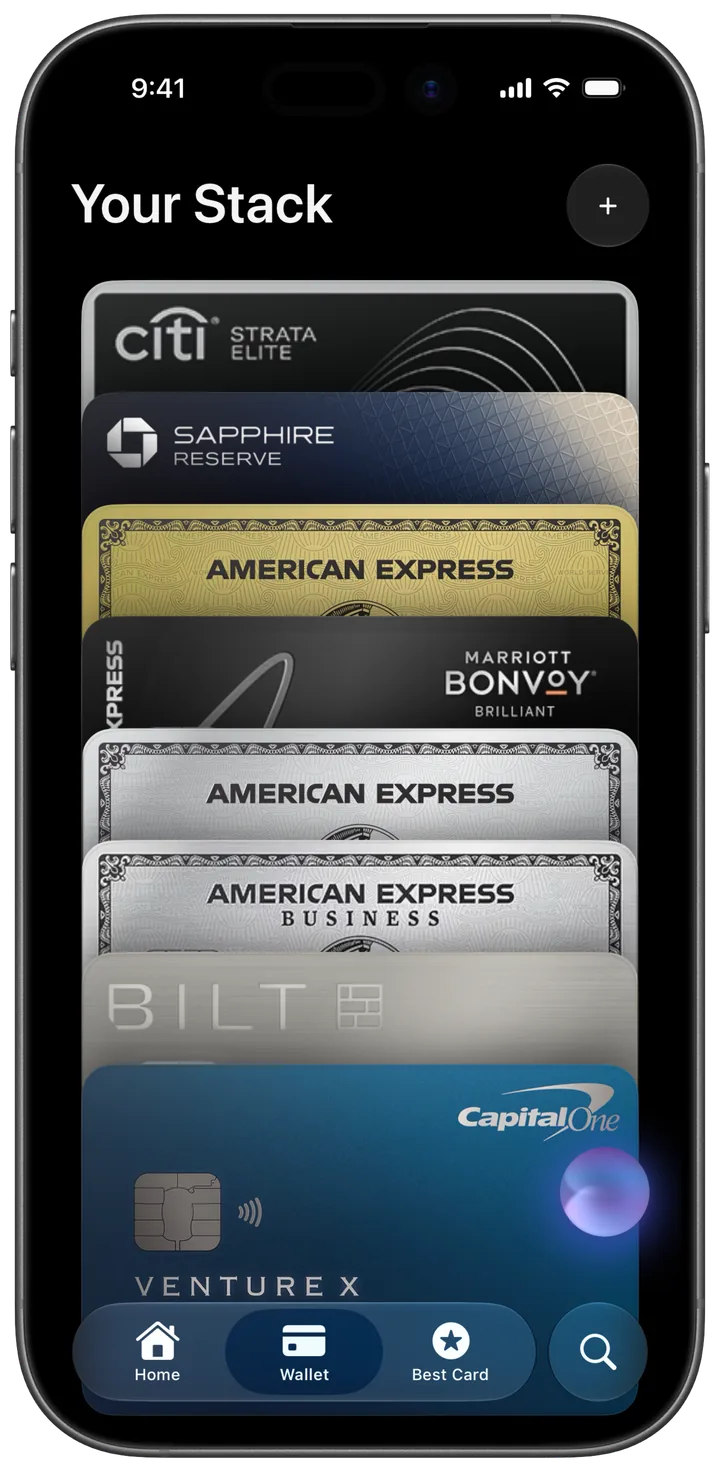
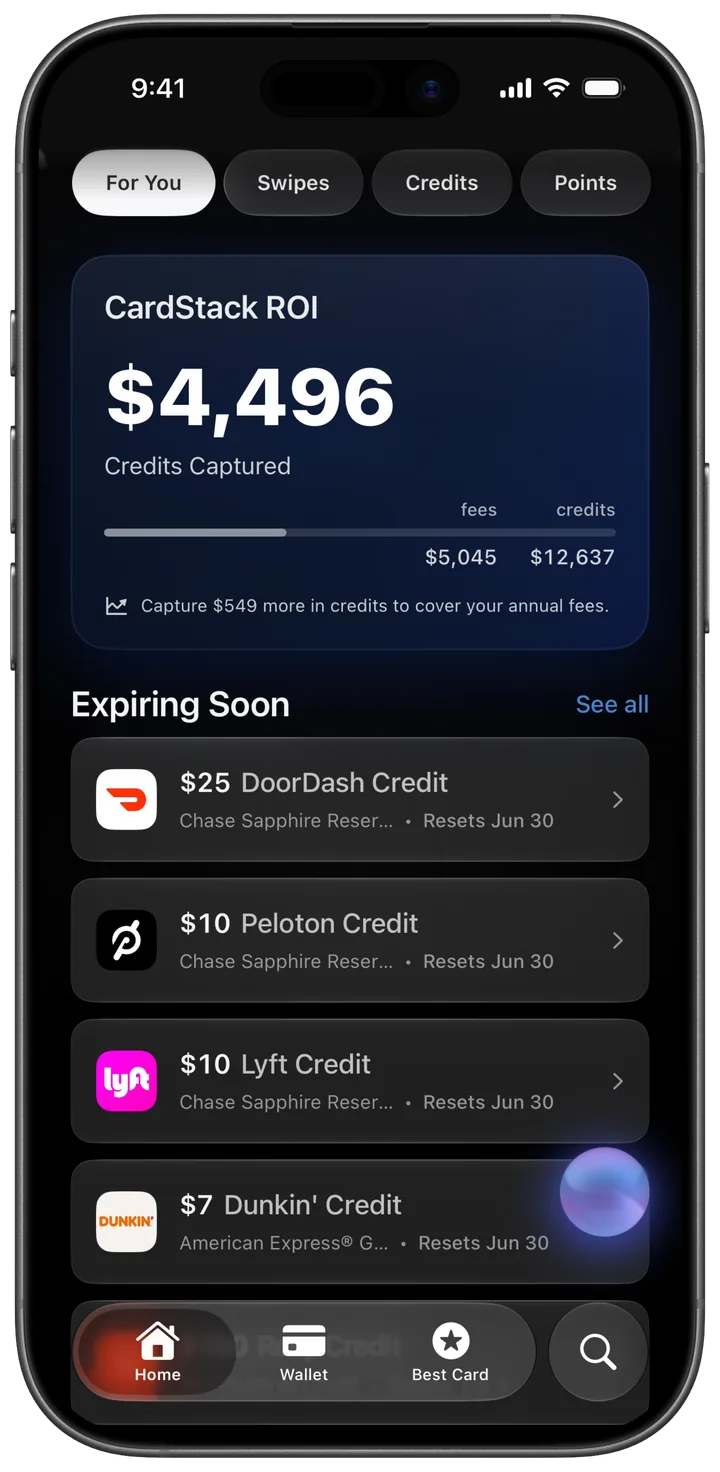
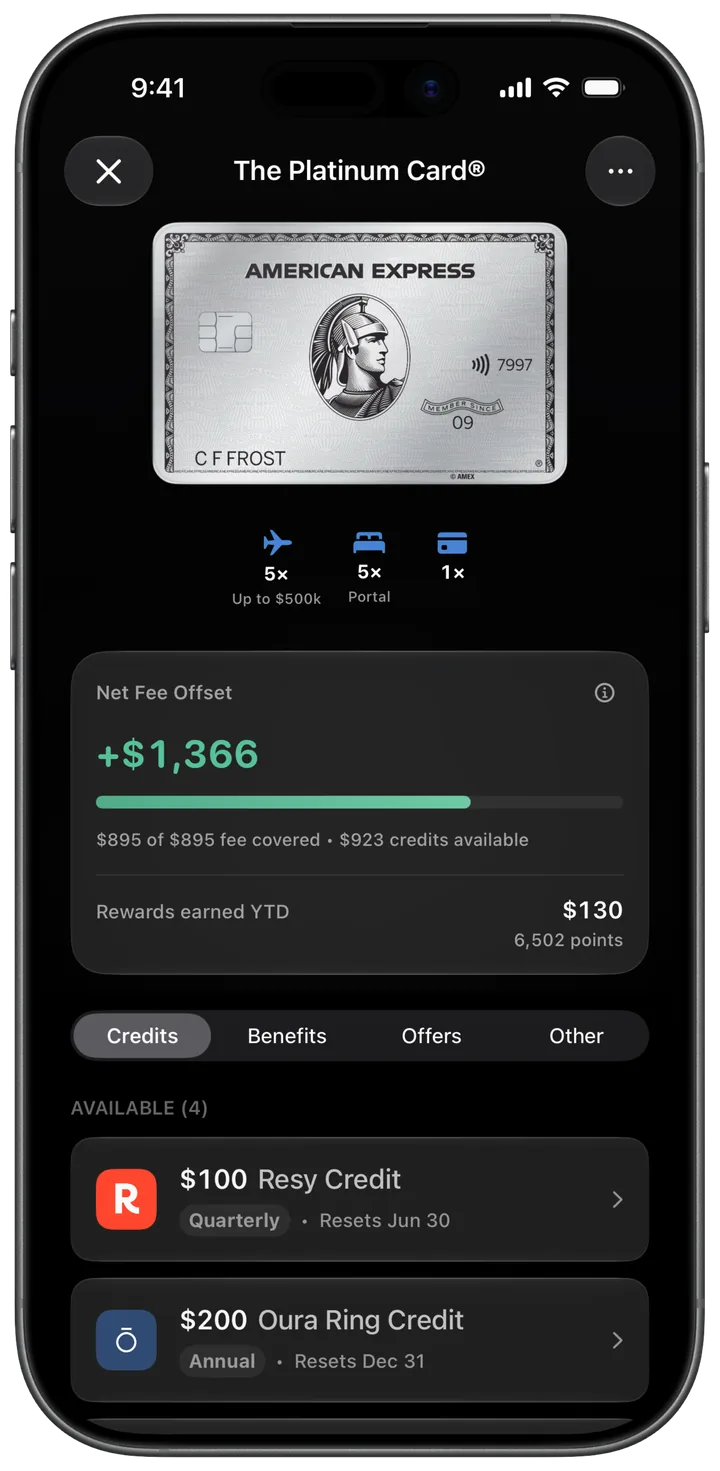
Get $1000+ a year back from your premium cards.
CardStack tracks every credit, offer, and renewal across your wallet so unused perks do not slip past their reset dates.



CardStack Insiders
Newsletter
Card news, standout deals, and product updates—straight to your inbox.
By signing up, you agree to ourTermsandPrivacy Policy. Unsubscribe anytime.
Read Next
Related articles