Chase Sapphire Reserve Review 2026: Worth $795?
The CSR overhauled its benefits and raised its fee to $795. Here's an honest look at the new credits, the earn rates, and who should hold this card.


The Chase Sapphire Reserve used to be the easiest premium card to defend. One $300 travel credit. Strong points. Best travel protections in the business. Done.
Chase overhauled it. The annual fee is now $795, up from $550. In exchange, they layered in a long list of new credits across hotels, dining, entertainment, and streaming. The math got better on paper. The card got harder to manage in practice.
Sound familiar?
TL;DR
- Annual fee: $795
- Key credits: $300 travel (automatic), $500 The Edit hotels, $300 dining, $300 entertainment, $300 DoorDash, $288 Apple TV + Music, $250 Select Hotels (through Dec 31, 2026)
- 4x on direct flights and hotels, 3x on dining worldwide, 8x through Chase Travel
- Chase Sapphire Lounges + Priority Pass (1,300+ locations)
- Best card on the market for World of Hyatt redemptions
- Travel protections are class-leading, better than any Amex card
- The $300 travel credit remains the most frictionless credit on any premium card
What Just Changed
The 2025 CSR refresh was the most significant overhaul since the card launched. Chase kept what worked and added a pile of new credits to justify a $245 fee increase.
What stayed:
- $300 annual travel credit (automatic, applies to almost anything travel-related)
- Priority Pass lounge access
- 3x on dining worldwide
- Global Entry/TSA PreCheck credit
- World-class travel protections
What was added:
- $500 The Edit hotel credit ($250 semi-annual, 2-night minimum)
- $300 dining credit ($150 semi-annual, Sapphire Reserve Exclusive Tables via OpenTable)
- $300 entertainment credit ($150 semi-annual, StubHub and viagogo)
- $300 DoorDash credit ($25/month in promos) plus DashPass
- $288 Apple TV + Apple Music credit (one-time annual activation)
- $250 Select Hotels credit (IHG, Omni, Montage, Pendry, Virgin Hotels) — through December 31, 2026
- $120 Lyft credit ($10/month, through September 2027)
- $120 Peloton credit ($10/month)
Earn rates also improved:
- 8x on Chase Travel bookings (up from 5x)
- 4x on direct flights and hotels (new dedicated rate)
- 3x on dining worldwide (unchanged)
Chase essentially looked at what Amex was doing with the Platinum and decided to compete credit-for-credit. The result is a card that now requires real attention to use well, but one that delivers genuine value if you do the work.
Breaking Down the $795 Fee
Credits that run on autopilot
Still the best credit on any premium card. It applies automatically to virtually anything Chase codes as travel, flights, hotels, car rentals, train tickets, Uber, tolls, parking. There is no enrollment required, no specific merchant, no portal to use. You spend on travel and the credit applies.
Most cardholders burn through this in the first month of their card year without thinking about it.
One-time activation through the Chase app links your Apple ID and suspends your existing Apple subscriptions. If you pay for either service, this is an automatic $288 back. Set it once, forget it.
$300 DoorDash Credit ($25/month)
Structured as two $10 non-restaurant promos and one $5 restaurant promo per month, plus a complimentary DashPass membership. If you use food delivery at all, this is easy. The DashPass alone eliminates delivery fees on Uber Eats’ main competitor, real money if you order regularly.
Credits that require planning
$500 The Edit Hotel Credit ($250 semi-annually)
Chase’s curated hotel booking platform includes Hyatt, Marriott, and a range of boutique properties. Two-night minimum per booking. You still earn hotel loyalty points and elite night credits because these count as qualifying stays, which is a significant advantage over Amex’s Fine Hotels + Resorts, where points earning can vary.
This is legitimately excellent value if you take two or more hotel trips per year. At $250 semi-annually, you need to book one qualifying stay every six months.
$300 Dining Credit ($150 semi-annually)
Applies to Sapphire Reserve Exclusive Tables, a curated list of restaurants bookable through OpenTable. The concept is strong: you get access to reservations at hard-to-book restaurants in major cities, and you get statement credits for eating there. The execution depends entirely on whether those restaurants are in your city and your price range.
In New York, LA, Chicago, and Miami: easy. In smaller cities: significantly harder.
$300 Entertainment Credit ($150 semi-annually)
StubHub and viagogo for concerts, sports, and live events. If you attend events, this is real money. If you do not, it is dead value and requires behavior change to use.
IHG, Omni, Montage, Pendry, Virgin Hotels, Minor Hotels, and Pan Pacific. An annual credit requiring a 2-night minimum stay on prepaid bookings through Chase Travel. Chase has this benefit scheduled through December 31, 2026 — it is not guaranteed to continue beyond that date. If any of these chains are part of your normal travel, use it while it is live. Otherwise it requires a specific booking you might not otherwise make.
$120 Lyft Credit ($10/month, through September 2027)
Only works for Lyft, not Uber. In cities where Lyft has good coverage, automatic. In markets where Uber dominates, you may find yourself switching apps just for the credit.
Credits that require $75,000 in annual spend
If you put significant spend on the CSR, two additional credits become available for the remainder of that calendar year and through the following year:
Statement credits at The Shops at Chase after $75,000 in card spend in a calendar year. Niche unless you already shop there.
$500 Southwest Airlines Credit
Southwest purchases through Chase Travel after the same $75,000 spend threshold. Valuable for Southwest loyalists; irrelevant for everyone else.
My Realistic Math
Here is what the credits look like when I strip the marketing out and count only what I would personally use.
| Credit | Annual Value | Realistic Value |
|---|---|---|
| Annual Travel ($300) | $300 | $300 |
| The Edit Hotels ($500) | $500 | $500 |
| Apple TV + Music ($288) | $288 | $288 |
| DoorDash ($300) | $300 | $200 |
| Dining Credit ($300) | $300 | $150 |
| Entertainment ($300) | $300 | $150 |
| Select Hotels ($250, 2026 only) | $250 | $125 |
| Lyft ($120) | $120 | $60 |
| Peloton ($120) | $120 | $0 |
At realistic usage, most people who travel a few times a year and live in a major city will extract $1,500 to $1,800 in credits against a $795 fee, a solid net positive before earning a single point.
The travel credit and The Edit hotels alone cover the fee. Everything else is upside.
The Earn Rates Are Solid, Not Spectacular
This is where the CSR sits in an interesting middle position.
3x on dining worldwide is strong and flexible. It matches the Chase Sapphire Preferred (also 3x dining) while falling short of the Amex Gold (4x dining and 4x U.S. supermarkets, each capped). For dining-heavy spenders, the Gold earns more points per dollar, but the CSR beats it on travel protections and lounge access.
4x on direct flights and hotels is competitive but not class-leading. The Amex Platinum earns 5x on flights.
8x through Chase Travel is excellent, but comes with a catch: you must use Chase’s portal, which can sometimes have higher base prices than booking direct or through other channels. Points Boost on select properties helps close the gap.
1x on everything else is the same limitation every premium travel card shares.
The real advantage is Chase Ultimate Rewards transfer partners. Thirteen options including World of Hyatt, Air Canada Aeroplan, British Airways, and Air France/KLM Flying Blue. Hyatt in particular delivers some of the best cents-per-point redemptions in the entire loyalty space, properties that would cost $400 to $600 per night booking direct often redeem for 15,000 to 25,000 points.
Use the points-vs-cash calculator to see what your balance is worth before you redeem.
Lounge Access: Good, Not Great
Chase Sapphire Lounges are genuinely excellent. The Philadelphia, Boston, New York (JFK), and Las Vegas locations are well-designed, well-stocked, and rarely as overcrowded as Amex Centurion Lounges. The network is expanding.
The problem is there are still only a handful of them. If your home airport does not have one, your lounge access defaults to Priority Pass, 1,300+ locations worldwide, which sounds impressive until you discover that the quality varies enormously. Some Priority Pass lounges are excellent. Some are barely a café with a velvet rope.
Chase also removed restaurant access from Priority Pass in 2023. So the “1,300+ locations” number is smaller in practical terms than it used to be.
For domestic travelers who fly through airports without a Chase Sapphire Lounge, the Amex Platinum’s Centurion Lounge network still has an edge. For international travelers and anyone flying through a Chase Sapphire Lounge city, the gap narrows.
Where the CSR Genuinely Wins: Travel Protections
No premium card beats the Chase Sapphire Reserve on travel protections. This is not close.
Trip cancellation and interruption: Up to $10,000 per covered traveler, $20,000 per trip. If a flight gets canceled due to illness, severe weather, or other covered situations, you can be reimbursed for prepaid, non-refundable expenses.
Primary rental car insurance: This is significant. Most cards offer secondary coverage, which only kicks in after your personal auto insurance pays out, meaning your rates could go up. The CSR provides primary coverage up to $75,000. When you rent a car and decline the collision insurance at the counter, you are actually covered.
Trip delay reimbursement: If your flight is delayed more than 6 hours or requires an overnight stay, you are covered for meals and lodging up to $500 per traveler.
Emergency evacuation: Up to $100,000 for emergency medical evacuation during travel.
I have had claims paid out by Chase travel insurance. The process was fast. The coverage was real. This is not marketing copy, it is the most reliable travel insurance stack in the credit card space.
Who This Card Is For
The Chase Sapphire Reserve makes sense if you:
- Travel at least a few times per year and can use The Edit hotel credit across two bookings
- Fly through airports with Chase Sapphire Lounges or are happy with Priority Pass
- Use DoorDash or can shift food delivery spend to DashPass
- Already subscribe to Apple TV and/or Apple Music
- Want the best available travel protections on every trip you book with the card
- Are a World of Hyatt loyalist who redeems Hyatt points well
- Prefer a more flexible travel credit over a rigid credit list
Who Should Skip It
This card is not worth it if you:
- Rarely stay in hotels and cannot use The Edit credit
- Live in a city without a Chase Sapphire Lounge and do not find Priority Pass useful
- Will not use the dining, entertainment, or Lyft credits and need them to offset the fee
- Already hold the Amex Platinum and the overlap in benefits is too high, see how they compare directly
- Are over Chase’s 5/24 rule (five new credit cards in the past 24 months), Chase will deny the application
- Prefer the simplicity of the old CSR and do not want to track eight new credits
A Note on the 5/24 Rule
If you have opened five or more credit cards across any issuer in the past 24 months, Chase will decline this application. This rule is strict and broadly applied.
If you are in the early stages of building a travel card setup, apply for Chase cards first before adding Amex, Capital One, or Citi products. Once you exceed 5/24, access to the entire Chase Sapphire lineup closes until your older applications age off.
Final Verdict
The Chase Sapphire Reserve is a better card in 2026 than it was before the overhaul, but it requires more work to justify.
The $300 travel credit and The Edit hotel credit together can cover the entire $795 fee if you travel twice a year and book through Chase’s hotel platform. The Apple TV and DoorDash credits run on autopilot. The travel protections remain the best in class.
The new credits make the math work. But the card is no longer the clean, simple premium travel card it used to be. It is now a credit management exercise, just a different one than the Amex Platinum.
If you travel regularly, fly through airports with Chase Sapphire Lounges, and are loyal to World of Hyatt, this card belongs in your wallet. The Hyatt transfer partner alone is worth the annual fee for the right redemptions.
If you want the simplest setup, the math stops working the moment you miss The Edit credit or let the dining credit lapse.
Do the math. Track your credits. And if you hold the Platinum, make sure you are not paying for overlapping benefits before you add another $795 to your annual fee stack.
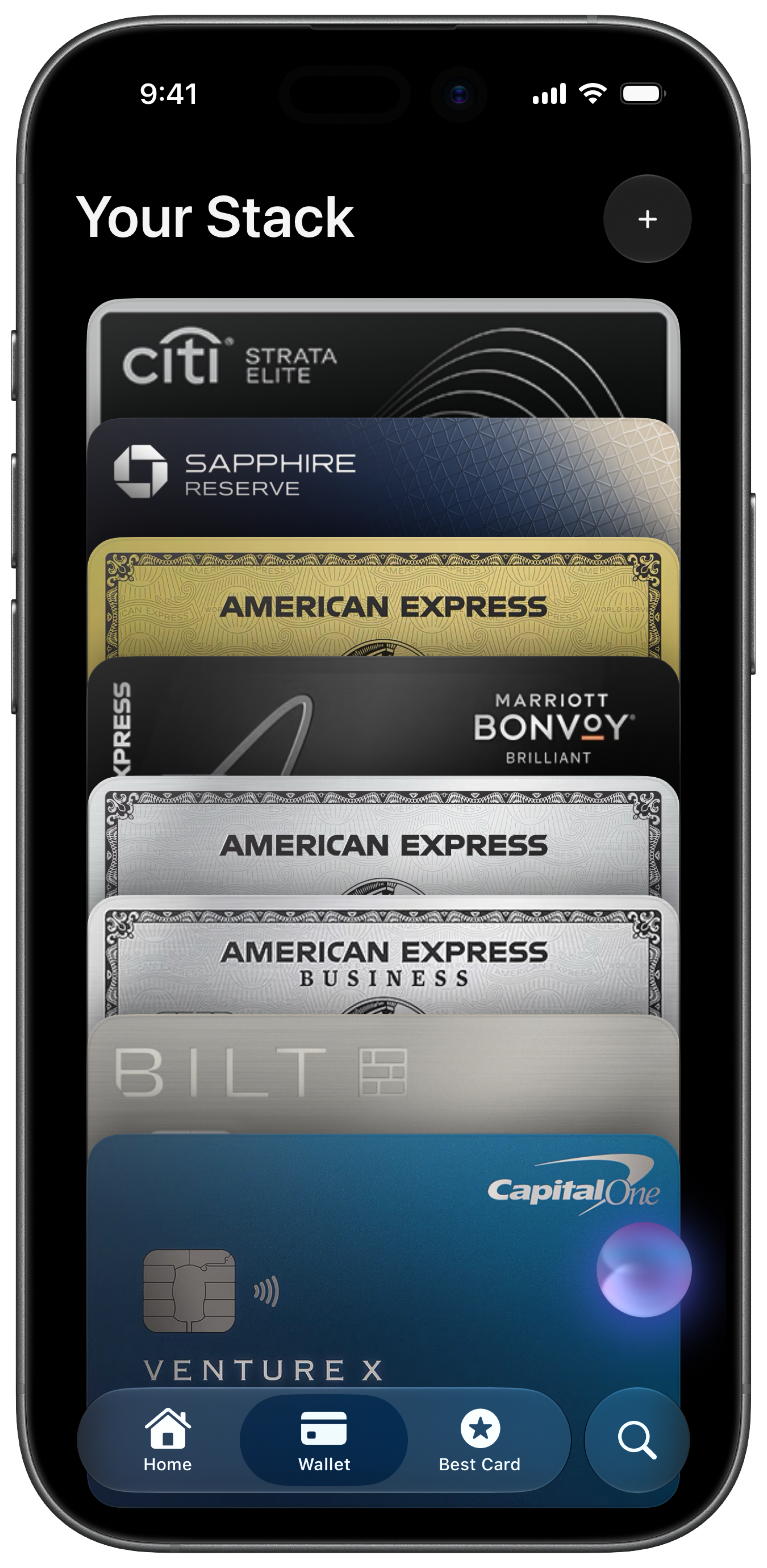
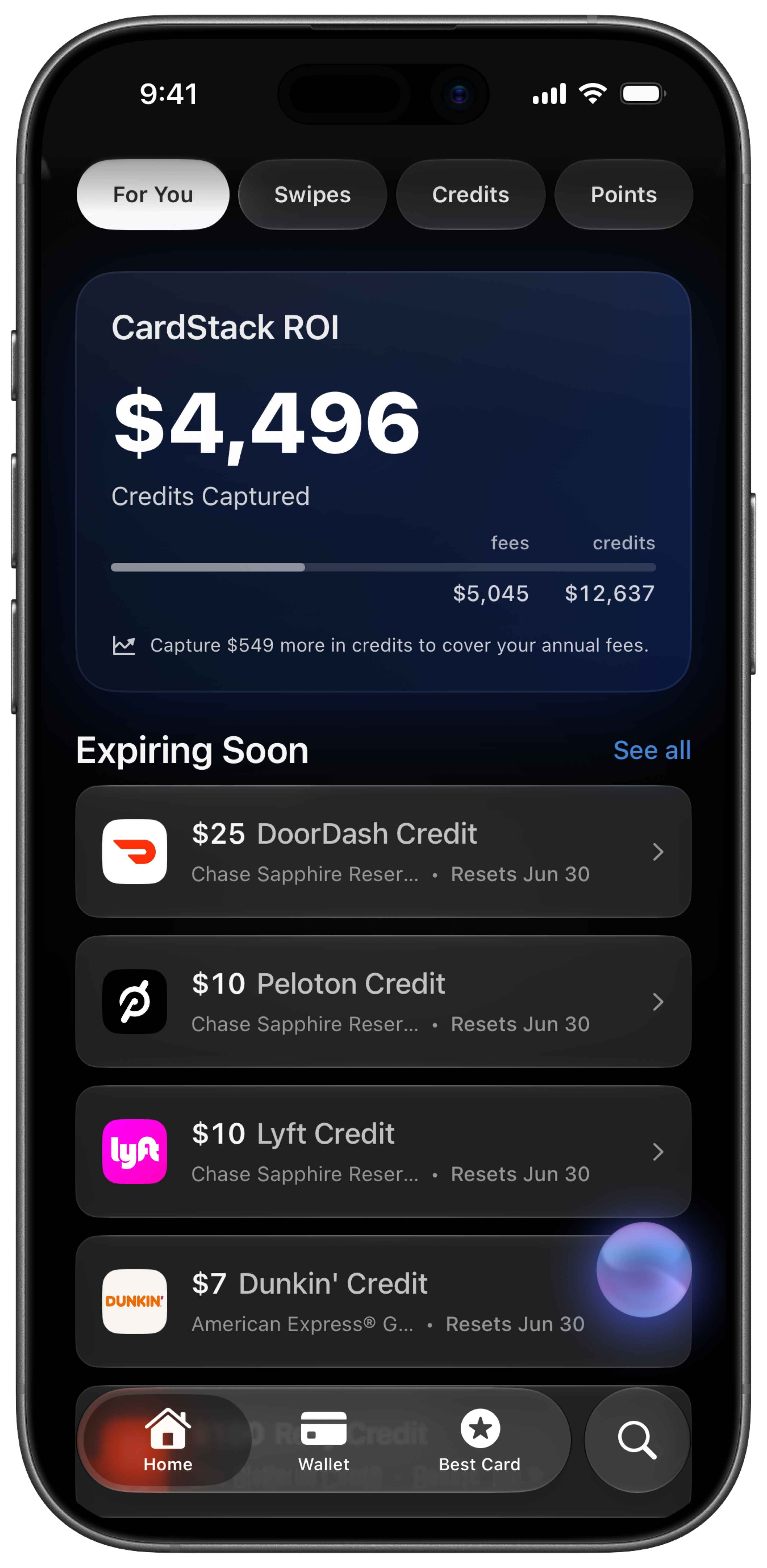
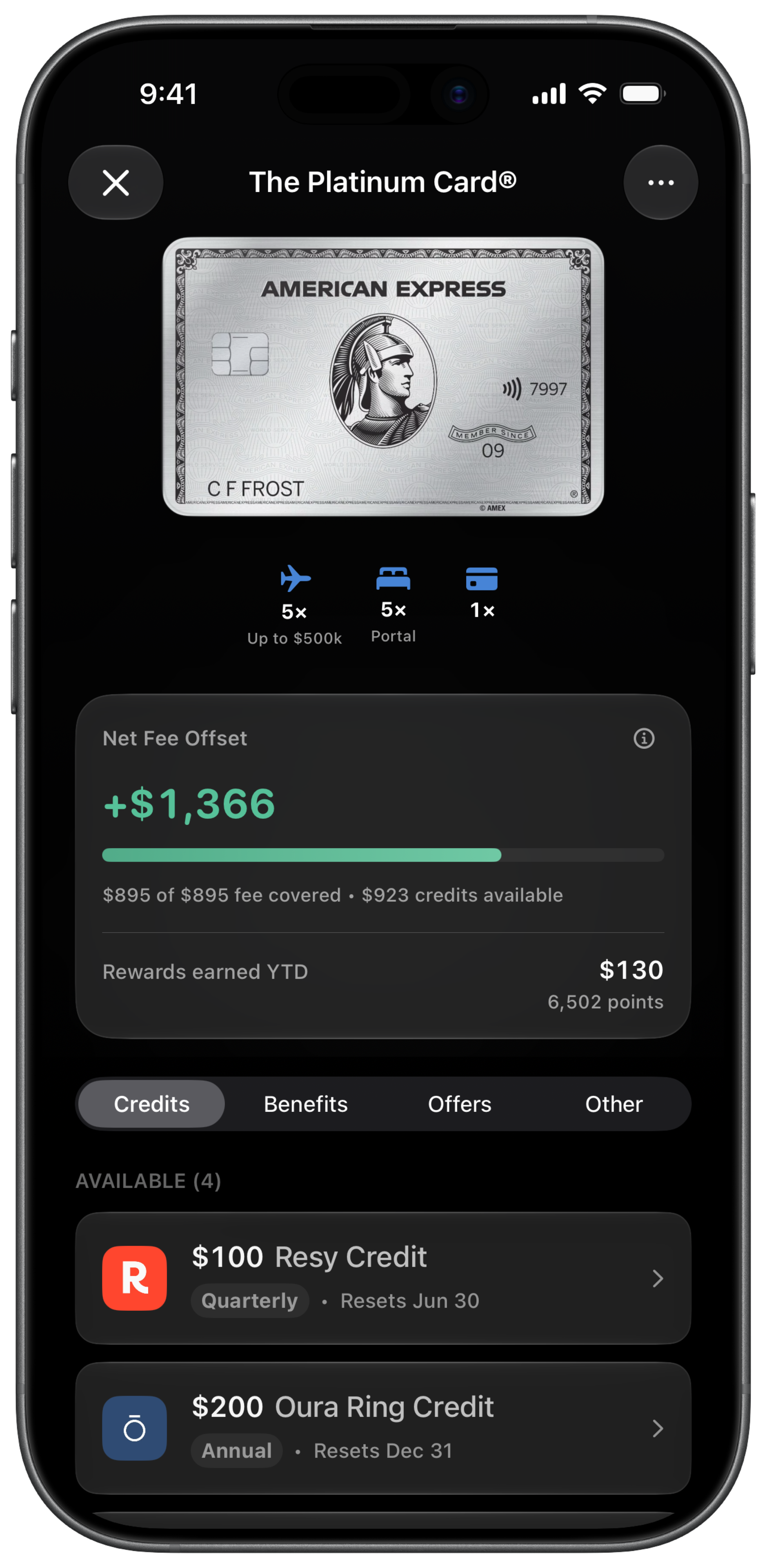
Get $500+ a year back from your premium cards.
CardStack tracks every credit, offer, and renewal across your wallet so unused perks do not slip past their reset dates.


CardStack Insiders
Newsletter
Card news, standout deals, and product updates—straight to your inbox.
By signing up, you agree to ourTermsandPrivacy Policy. Unsubscribe anytime.
Read Next
Related articles