
The $895 Amex Platinum: What It Really Costs After Credits
Amex Platinum effective annual fee explained: the $895 fee against $2,984 in 2026 credits, realistic break-even math, and who actually comes out ahead.


Nobody’s Amex Platinum actually costs them $895 — the card’s real cost depends entirely on usage. A heavy credit user can offset the fee several times over with credits they’d genuinely spend anyway. A passive holder fronts $895 in January and then lets credit after credit expire unused.
The number that decides which camp you’re in is the effective annual fee: the sticker fee minus the credits you actually used. Not the credits Amex advertises. Not the credits you meant to use. The ones that posted to your statement. This article runs that math honestly for 2026.
TL;DR
- Sticker fee: $895. Active 2026 recurring credits: about $2,984/year across 11 credits — a theoretical ceiling that assumes 100% capture, including Equinox, CLEAR+, Oura, and lululemon
- Break-even is $895 in used credits — roughly the hotel credit plus Resy, or Resy plus the monthly credits on autopilot
- A realistic engaged cardholder uses $1,500–$2,200 of credits — comfortably more than the fee, on spending they’d do anyway
- A passive cardholder using only Uber Cash and streaming credits captures
$500 → effective fee of **$395**, before counting lounge access and points - The gap between those two people is not income or luck. It is tracking
The credit stack, at face value
Here is every active credit on the Platinum in 2026 and what it is worth at full redemption:
| Credit | Annual Value | Cadence |
|---|---|---|
| Hotel Credit (FHR/THC) | $600 | $300 per half (Jan–Jun / Jul–Dec) |
| Resy Dining | $400 | $100 per quarter |
| Digital Entertainment | $300 | $25 per month |
| Equinox | $300 | Calendar year |
| lululemon | $300 | $75 per quarter |
| CLEAR+ | up to $209 | Calendar year |
| Uber Cash | $200 | $15/month + $20 bonus in December |
| Airline Fee | $200 | Calendar year, one selected airline |
| Oura Ring | $200 | Calendar year |
| Walmart+ | ~$155 | ~$12.95/month |
| Uber One | $120 | Calendar year, membership fee |
| Total | ~$2,984 |
(The Saks credit is gone — it ended June 30, 2026. There’s also a $120 Global Entry / $85 TSA PreCheck credit, but it recurs only every four years, so it barely moves annual math.)
$2,984 against $895 looks better than it really is. It is — that total is a theoretical ceiling that assumes you capture every dollar of every credit, including a $300 Equinox membership credit, $300 of lululemon spend, and a $200 Oura Ring purchase. Almost every credit is a coupon for a specific merchant on a specific schedule, and unused amounts vanish. Amex’s fee is guaranteed revenue; your credits are contingent on your behavior. That asymmetry is the business model.
The honest way to count each credit
Before subtracting anything from $895, apply two filters:
1. Would I spend this money anyway? A credit only counts at face value if it displaces spending you’d do regardless. If you already subscribe to Disney+ or YouTube TV, the $300 entertainment credit is real money. If you’d have to start a subscription to use it, it is worth less than face — maybe much less.
2. Will I actually redeem it on schedule? A $300 semiannual hotel credit is worth $600 a year to someone who takes two trips, and $0 to someone who doesn’t leave town. The quarterly Resy and lululemon credits die every 90 days with no rollover.
Run each credit through both filters and you get your personal number. Here are three honest profiles:
| Credit | Engaged traveler | Typical cardholder | Passive holder |
|---|---|---|---|
| Hotel ($600) | $600 | $300 | $0 |
| Resy ($400) | $400 | $300 | $100 |
| Digital Entertainment ($300) | $300 | $300 | $300 |
| Uber Cash ($200) | $200 | $200 | $150 |
| Airline Fee ($200) | $150 | $100 | $0 |
| Uber One ($120) | $120 | $120 | $0 |
| Walmart+ (~$155) | $155 | $0 | $0 |
| CLEAR+ ($209) | $209 | $0 | $0 |
| Equinox / lululemon / Oura ($800) | $300 | $0 | $0 |
| Used credits | ~$2,434 | ~$1,320 | ~$550 |
| Effective annual fee | –$1,539 | –$425 | +$345 |
A negative number here does not mean Amex is paying you to hold the card — it means the credits you’d genuinely use exceed the fee, provided every one of them displaces spending you’d do anyway. The engaged traveler’s –$1,539 assumes real hotel stays, real Resy dinners, a real CLEAR membership. Change any of those assumptions and the number moves fast. The passive holder is paying $345 a year — still arguably fine once you add lounge access and points, but a very different card than the one in the marketing.
Where break-even actually sits
You need $895 in used credits to zero out the fee. In practice there are two clean paths:
The travel path: Use both $300 hotel halves ($600) plus Resy at even $75 a quarter ($300). Done — $900, and you haven’t touched the monthly credits.
The city path: No hotels needed. Digital entertainment on autopilot ($300) + Uber Cash ($200) + Uber One ($120) + full Resy ($400) = $1,020. All four are things an urban cardholder plausibly spends on anyway.
If neither path describes your life — you don’t book prepaid hotels through Amex Travel, you don’t use Uber, you don’t eat at Resy restaurants — stop forcing the math and consider a different card. The Chase Sapphire Reserve has a broader automatic travel credit, and the Amex Gold delivers dining value at a $325 fee. The Platinum only wins when its specific coupons overlap your actual spending.
What the fee buys beyond credits
The effective-fee math above ignores three real sources of value, deliberately — they’re harder to price, but they matter at the margin:
- Lounge access. The Global Lounge Collection (Centurion Lounges, Priority Pass Select, 10 Delta Sky Club visits per Medallion Year on eligible Delta flights) is worth hundreds a year to frequent flyers, close to zero to everyone else. Note the July 8, 2026 Centurion change: access is limited to a five-hour pre-departure window, and guests cost $50 unless you qualify for complimentary guest access with $75,000 in calendar-year spend.
- Points. 5x Membership Rewards on flights booked directly with airlines or via Amex Travel (up to $500,000/year), 1x on everything else. At the ~2.0 cents-per-point valuation in our points value chart, $5,000 of annual flight spend is roughly $500 in transfer-partner value.
- The welcome bonus. Public offers have often been around 80,000 points after $8,000 spend in six months, with targeted offers reported higher — verify the current offer before applying. At ~2.0 cpp that’s ~$1,600 of first-year value, which is why the first year almost always pencils and renewal years are where the effective-fee question gets real.
The renewal-day test
The right time to run this math is the month before your anniversary, with real numbers instead of intentions. The question is simple: how many dollars of credits posted to my statements in the last 12 months?
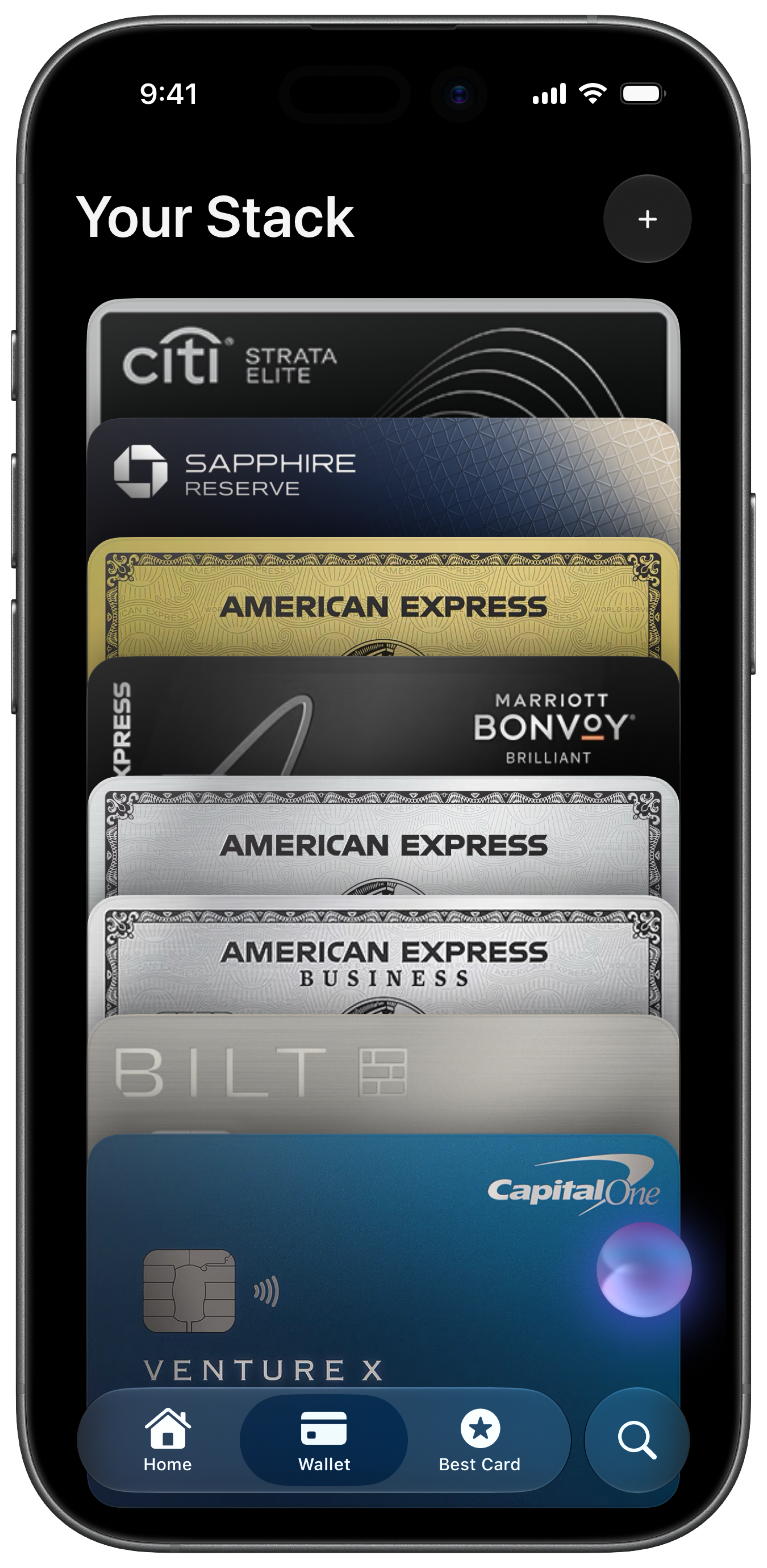
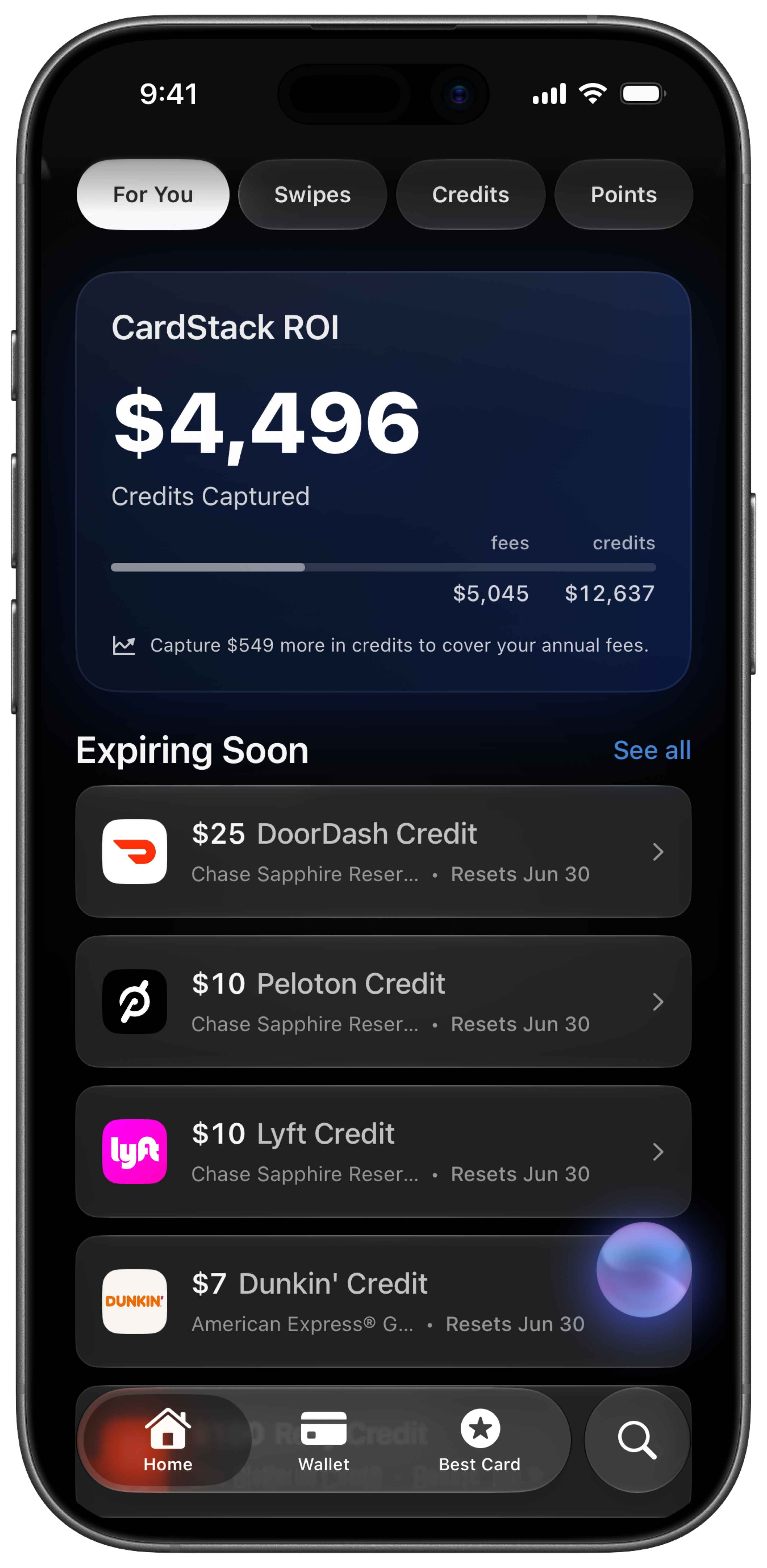
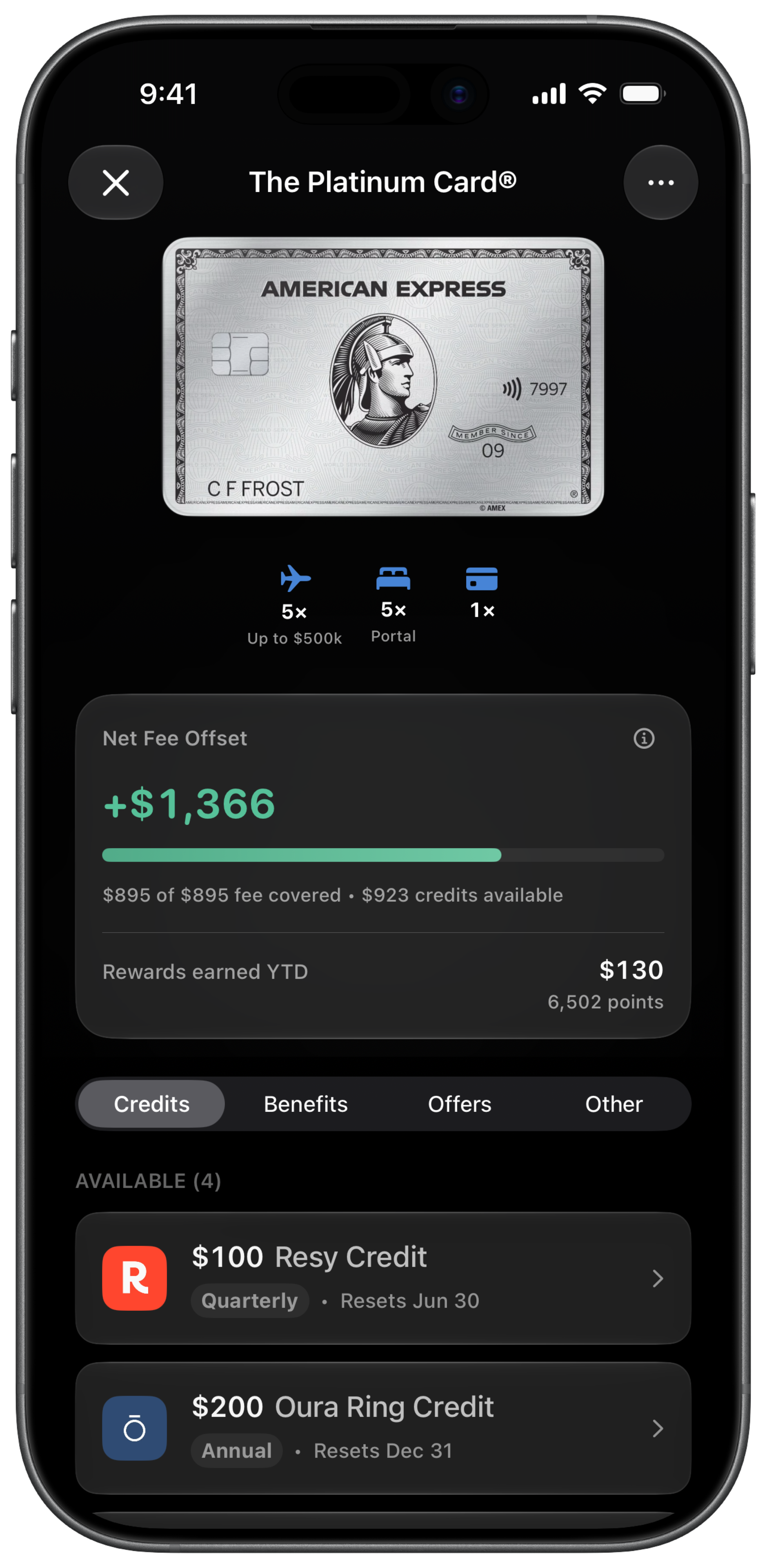
Most people can’t answer it. The Amex app shows credit usage, but scattered per-benefit and per-screen, with no running annual total. This is exactly the job CardStack was built for: it tracks every Platinum credit against its actual reset schedule, marks credits used automatically when they post (via read-only Plaid sync), and computes your effective annual fee continuously — fee minus credits actually used, updated all year. On renewal day you look at one number, not twelve benefit screens.
If that number says you used $1,800 in credits, keep the card and stop second-guessing an $895 fee that netted you money. If it says $500, you have a year of evidence that this card is mispriced for your life — downgrade paths and keep-or-cancel decisions get much easier with data.
Bottom line
The Amex Platinum’s real price in 2026 is not $895. It’s $895 minus whatever slice of $2,984 in credits you actually redeem — which means it ranges from negative on paper (credits you’d spend anyway more than cover the fee) to more than sticker (you pay $895 and donate the coupons back to Amex).
The variable isn’t luck. It’s whether anything is watching those eleven reset schedules. Track the credits — with a spreadsheet if you enjoy that, or with CardStack if you’d rather it just happen — and the $895 question answers itself.
For the full card breakdown beyond the fee math, see the complete Amex Platinum credits list and the 2026 Platinum review.
Get $500+ a year back from your premium cards.
CardStack tracks every credit, offer, and renewal across your wallet so unused perks do not slip past their reset dates.





CardStack Insiders
Newsletter
Card news, standout deals, and product updates—straight to your inbox.
By signing up, you agree to ourTermsandPrivacy Policy. Unsubscribe anytime.
Read Next
Related articles