The Chase Trifecta: Best 3-Card Setup for Ultimate Rewards (2026)
Build a three-card Chase wallet. Which cards cover each spending category and how points pool in Ultimate Rewards.




The Chase Trifecta is the most recommended three-card setup in the credit card rewards space, and for good reason. Three Chase cards (one premium, two no-fee) cover every spending category at a strong earn rate, pool all your points into a single Ultimate Rewards account, and cost less than most single premium cards from competing issuers.
If you want a wallet that is simple, widely accepted, and genuinely valuable without requiring a spreadsheet to manage, this is the setup.
TL;DR
- Three cards: Sapphire Reserve (or Preferred) + Freedom Unlimited + Freedom Flex
- Total annual fees: $795 (with Reserve) or $95 (with Preferred)
- Every dollar earns at least 1.5x Ultimate Rewards
- Dining, travel, and rotating categories earn 3x–5x
- All points pool into one account with 13+ transfer partners
- Visa acceptance everywhere, including internationally
The Three Cards
Card 1: Chase Sapphire Reserve (or Preferred), the anchor
The anchor card is where your points live. It provides the premium earning rates, the transfer partner access, and (with the Reserve) the travel credit and lounge access.
Chase Sapphire Reserve: $795/year
- 3x on dining worldwide
- 4x on direct flights and hotels; 8x on flights and hotels booked through Chase Travel
- 5x on Lyft rides (through September 2027)
- $300 annual travel credit (brings the fee to $495 before other credits)
- Priority Pass lounge access + Chase Sapphire Lounges
- 1.5x point multiplier in the Chase travel portal
- 50% more value when redeeming for travel through Chase
Chase Sapphire Preferred: $95/year
- 3x on dining and select streaming
- 2x on travel
- 5x on Chase Travel portal bookings
- $50 annual Chase Travel hotel credit
- 25% more value when redeeming for travel through Chase
Which one? If you travel more than a few times a year and value lounge access, the Reserve pays for itself. If your travel spending is under $5,000/year and you do not care about lounges, the Preferred is the better anchor at one-fifth the fee.
Card 2: Chase Freedom Unlimited, the everyday card
- 1.5x on everything (no cap)
- 3x on dining and drugstores
- 5x on Chase Travel portal bookings
- No annual fee
This is your default swipe for any purchase that does not fall into a bonus category on the other two cards. A flat 1.5x on everything means you never earn less than 1.5 Ultimate Rewards points per dollar. That floor matters. It is 50% better than the 1x you would earn on non-category spend with most rewards cards.
Card 3: Chase Freedom Flex, the category card
- 5x on rotating quarterly categories (up to $1,500/quarter, requires activation)
- 3x on dining and drugstores
- 5x on Chase Travel portal bookings
- No annual fee
The Freedom Flex is the wild card. Each quarter, Chase announces bonus categories that earn 5x. Recent categories have included grocery stores, gas stations, Amazon, PayPal, Walmart, and Target. You activate the quarter’s category in the Chase app (takes 10 seconds) and then earn 5x on up to $1,500 in spending, which works out to as much as 7,500 bonus points per quarter.
How Points Pool Together
This is the mechanism that makes the trifecta work. Chase allows you to transfer points between your own Chase cards at no cost. Points earned on the Freedom Unlimited and Freedom Flex can be moved to your Sapphire Reserve (or Preferred), where they gain access to transfer partners and the travel portal multiplier.
Without the Sapphire card, Freedom points are worth 1 cent each (cash back). With the Sapphire Reserve, those same points are worth 1.5 cents each in the Chase travel portal and 1.5–2.5 cents each through transfer partners like World of Hyatt and United MileagePlus.
The pooling is free and instant. You do it in the Chase app in about three taps.
Category Earning Table
Here is exactly which card to use for every major spending category:
| Category | Card | Earn Rate |
|---|---|---|
| Dining (restaurants, bars) | Sapphire Reserve | 3x UR |
| Flights and hotels (direct) | Sapphire Reserve | 4x UR |
| Flights and hotels (Chase Travel) | Sapphire Reserve | 8x UR |
| Lyft | Sapphire Reserve | 5x UR (through Sep 2027) |
| Rotating quarterly categories | Freedom Flex | 5x UR |
| Drugstores | Freedom Flex | 3x UR |
| Chase Travel portal bookings | Any of the three | 5x UR |
| Everything else | Freedom Unlimited | 1.5x UR |
No category earns below 1.5x. The categories where most people spend the most (dining and travel) earn 3x or better. And the quarterly 5x categories regularly include high-volume spending areas like groceries and gas.
For a broader comparison of multi-card setups across issuers, see the best 3-card setups for 2026.
The Value Calculation
Assume a moderate spending profile: $6,000 on travel, $8,000 on dining, $5,000 on quarterly 5x categories, and $20,000 on everything else.
| Category | Spend | Card | Rate | Points |
|---|---|---|---|---|
| Travel | $6,000 | CSR | 4x | 24,000 |
| Dining | $8,000 | CSR | 3x | 24,000 |
| Quarterly 5x | $5,000 | Freedom Flex | 5x | 25,000 |
| Everything else | $20,000 | Freedom Unlimited | 1.5x | 30,000 |
| Total | $39,000 | 103,000 UR |
At 2.0 cents per point through transfer partners, that is $2,060 in travel value.
Subtract the $795 CSR fee, add back the $300 travel credit and $120 DashPass value, and you are looking at roughly $1,685 in net annual value. That is a strong return from a setup that costs $795 total and takes very little effort to manage.
The 5/24 Rule
Chase has an unofficial rule: if you have opened 5 or more new credit card accounts (from any issuer) in the past 24 months, you will be automatically denied for most Chase cards. This is commonly called the 5/24 rule.
This matters for the trifecta because you need to get all three cards approved, and each one counts toward your 5/24 total.
Strategy:
- Apply for the Sapphire Reserve (or Preferred) first. It is the hardest to get approved for.
- Wait 3–6 months, then apply for the Freedom Flex
- Wait another 3–6 months, then apply for the Freedom Unlimited
- Keep your total new accounts across all issuers under 5 in any rolling 24-month window
If you are already at 4/24, get the Sapphire card first. The Freedom cards are easier to get approved for later, and Chase sometimes offers them even above 5/24 (though it is not guaranteed).
Reserve vs. Preferred as the Anchor
This choice drives the overall cost and value of the setup.
| Factor | Sapphire Reserve | Sapphire Preferred |
|---|---|---|
| Annual fee | $795 | $95 |
| Travel credit | $300 | $50 (hotels via Chase Travel) |
| Effective fee (travel credit only) | ~$495 | ~$45 |
| Dining earn | 3x | 3x |
| Travel earn | 4x direct / 8x via Chase Travel | 2x / 5x via Chase Travel |
| Portal multiplier | 1.5x | 1.25x |
| Lounge access | Priority Pass + Sapphire Lounges | None |
| DashPass | Included | Not included |
If you spend more than $5,000–$6,000 per year on travel, the Reserve’s higher earn rates (4x direct flights/hotels, 8x via Chase Travel) and portal multiplier (1.5x vs. 1.25x) generate enough extra value to justify the fee difference. Below that threshold, the Preferred is the smarter choice.
You can also start with the Preferred and product-change to the Reserve later if your travel spending increases. The product change does not count as a new account for 5/24 purposes.
For the head-to-head between the CSR and the Amex Platinum, see Platinum vs. Sapphire Reserve.
The “Which Card Do I Pull?” Problem
Three cards is manageable, but you still need to remember the category rules, especially the quarterly 5x categories that change every three months.
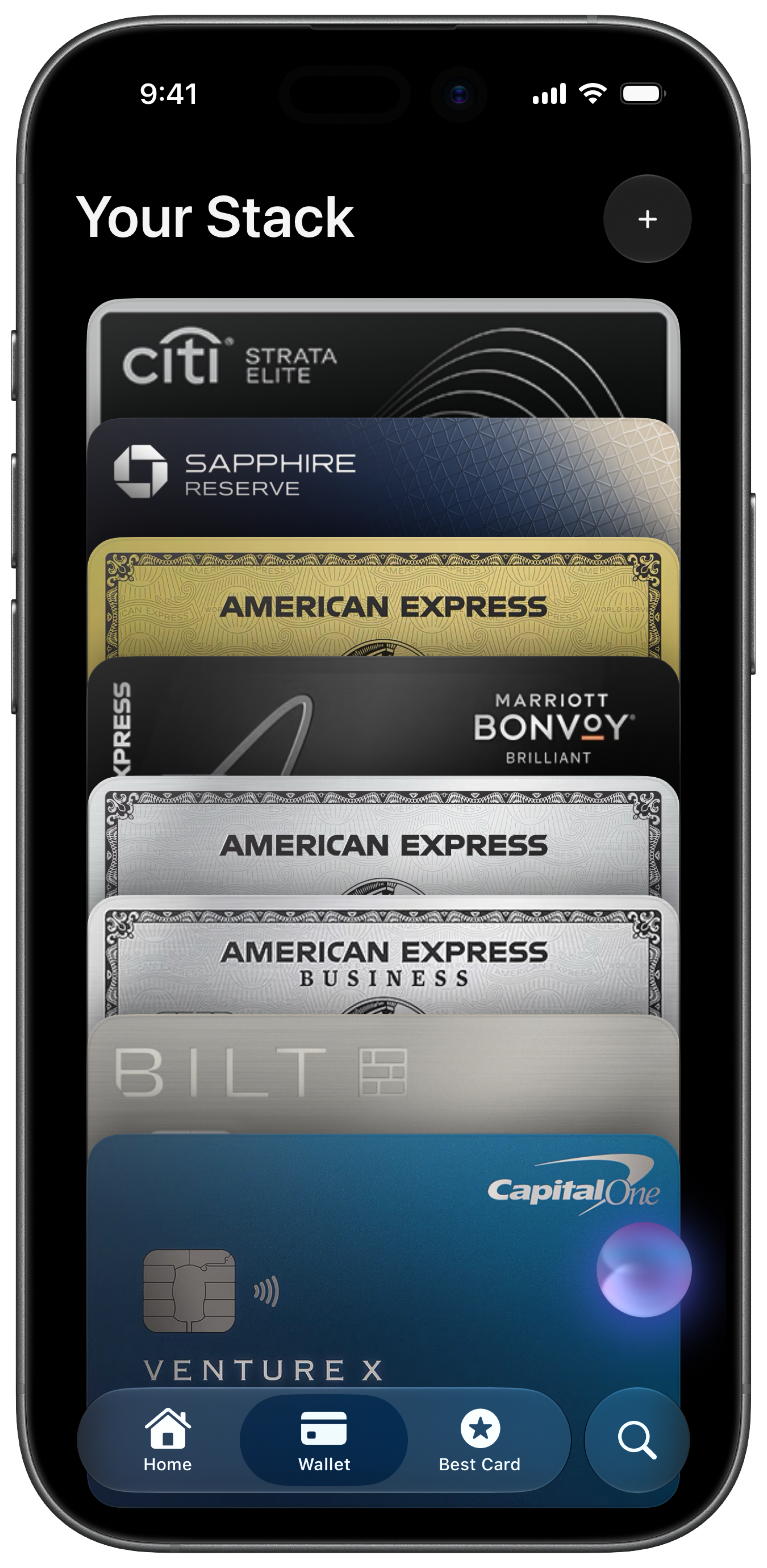
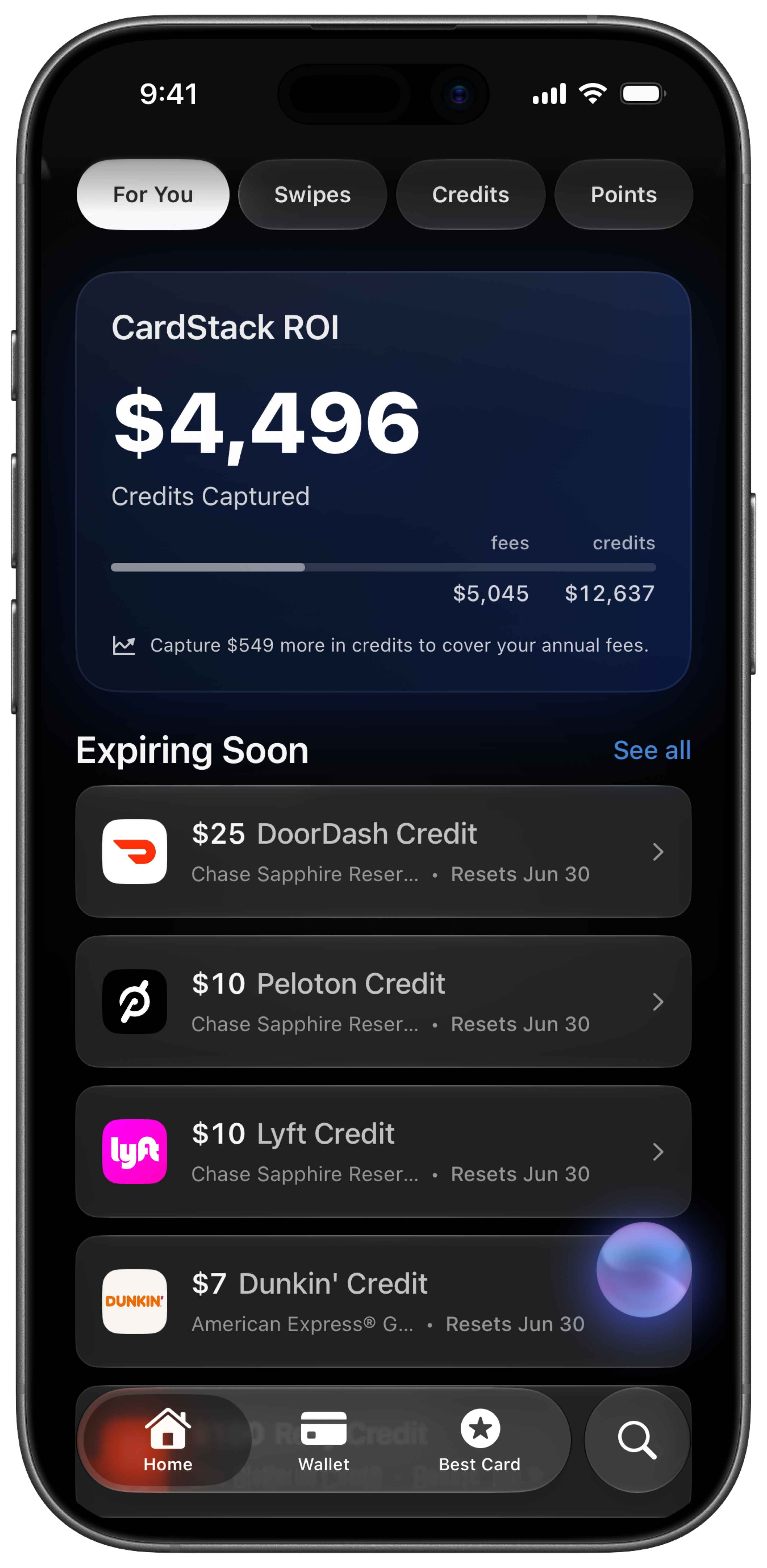
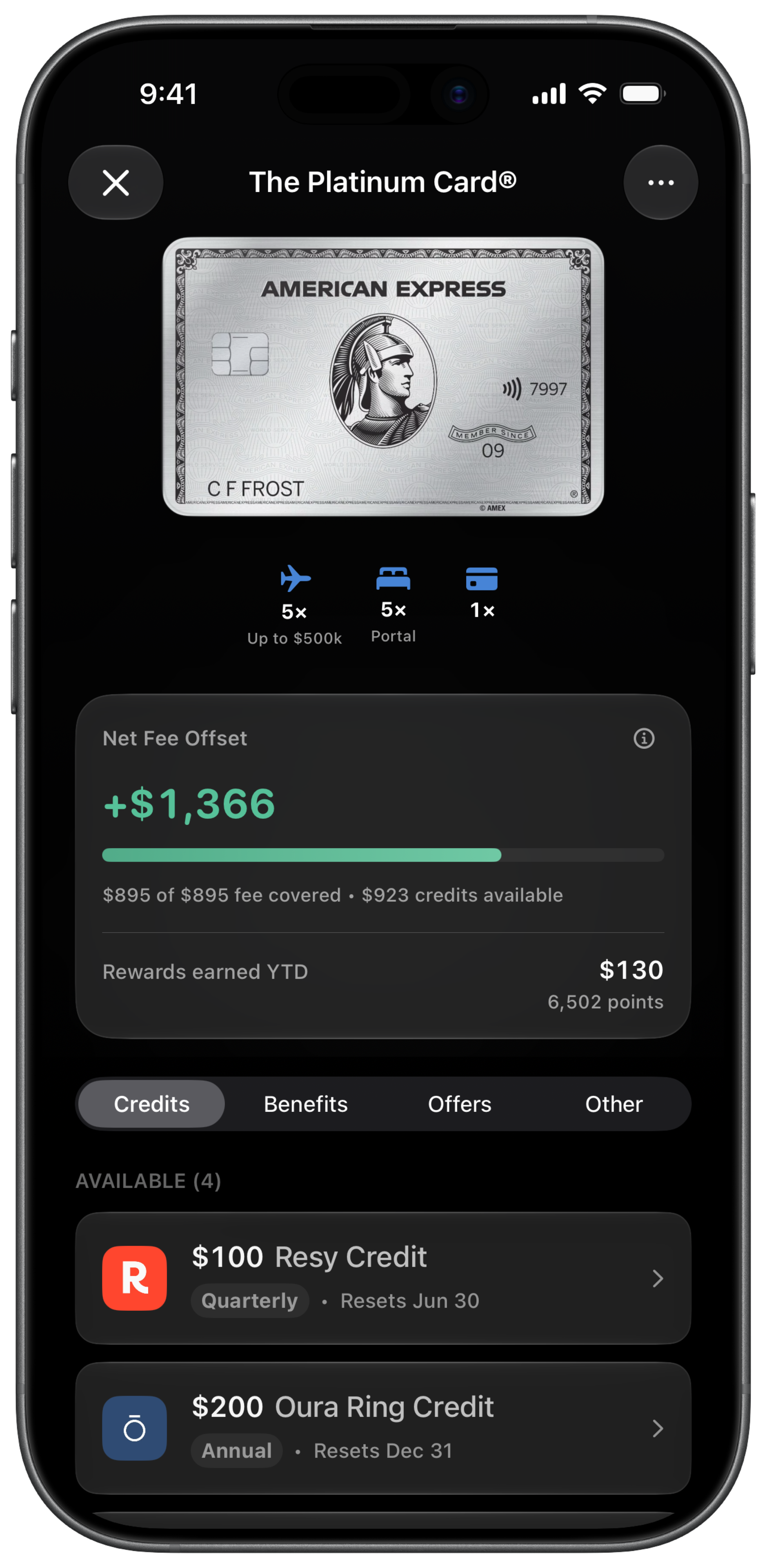
CardStack handles this automatically. It knows which Freedom Flex category is active this quarter, whether your dining charge should go on the Reserve, and when your travel credit is about to reset. Three cards is the sweet spot where a “which card here?” tool goes from nice-to-have to genuinely useful.
Final Thoughts
The Chase Trifecta works because it is simple, flexible, and cost-effective. Every dollar earns at least 1.5x. Your best categories earn 3x–5x. All points flow into one account with access to strong transfer partners: Hyatt, United, Southwest, British Airways, and more.
Two of the three cards cost nothing. The anchor card’s fee is largely offset by its travel credit. And Visa acceptance means you never get caught at a merchant that does not take your card.
If you want the highest possible earn rates, the Amex Trifecta wins on paper. But if you want broad acceptance, low fees, and less credit tracking, the Chase Trifecta is hard to beat.
Get $500+ a year back from your premium cards.
CardStack tracks every credit, offer, and renewal across your wallet so unused perks do not slip past their reset dates.

CardStack Insiders
Newsletter
Card news, standout deals, and product updates—straight to your inbox.
By signing up, you agree to ourTermsandPrivacy Policy. Unsubscribe anytime.
Read Next
Related articles