
Monthly vs. Annual Credit Card Credits: What to Know
Monthly credit card credits don't roll over — and cadence quietly decides how much of a credit you actually capture. The math on monthly vs annual credits.
 American Express® Gold Card

Here’s a question issuers hope you never ask: why is the Amex Platinum’s Uber benefit “$15 a month” instead of “$200 a year”?
Both phrasings describe (nearly) the same total. But they are not the same benefit. A $200 annual credit is one thing to remember. A $15 monthly credit is twelve separate deadlines, each with its own expiration, none of which roll over. Miss four months and the “$200 benefit” quietly became $140. The advertised value stayed on the marketing page; the difference stayed with the bank.
Cadence — how often a credit resets — is the most underrated number on any premium card. This is the math.
TL;DR
- Credit card credits never roll over. Unused monthly value dies on the 1st; unused quarterly value dies with the quarter; unused halves die June 30 and December 31
- Finer cadence = lower real-world capture. Twelve deadlines a year get missed more than one
- Issuers advertise the annualized total (“$200/year Uber Cash”) but deliver the sliced version ($15/month) — the gap between those two is their margin
- Annual credits have the opposite failure mode: one big deadline you remember in January and forget by November
- Match cadence to habits: monthly credits are only worth face value if they map to something you already do monthly
The four cadences, ranked by how much value survives
| Cadence | Example | Advertised | What typically survives |
|---|---|---|---|
| CadenceMonthly | ExamplePlatinum Uber Cash ($15/mo + $20 Dec) | Advertised$200/yr | What typically survivesHigh if habitual, poor otherwise |
| CadenceQuarterly | ExamplePlatinum Resy ($100/qtr) | Advertised$400/yr | What typically survivesGood in cities, one missed quarter = –25% |
| CadenceSemiannual | ExamplePlatinum Lodging ($300/half), CSR The Edit ($250/half) | Advertised$600 / $500 yr | What typically survivesAll-or-nothing per half; requires planning |
| CadenceAnnual | ExampleCSR $300 Travel | Advertised$300/yr | What typically survivesNear-100% when it’s broad and automatic |
The Platinum’s $600 Lodging Credit is shared across eligible prepaid FHR, The Hotel Collection, and Airbnb Luxe bookings, with one $300 limit per calendar half. The Hotel Collection and Luxe require two nights; FHR requires two nights for the credit starting January 1, 2027. The separate $250 Airbnb Experiences benefit requires a qualifying prepaid Luxe booking and eligibility confirmation, so it should not be counted as automatic annual value. See the Lodging Credit guide.
Notice what drives capture rate: it’s not the dollar amount, it’s the shape. The CSR’s $300 travel credit is the most reliably captured credit in the industry because it’s annual, automatic, and applies to any travel merchant code. The Platinum’s monthly credits are only captured reliably by people whose lives already include the merchant every single month.
Why monthly credits are easy to miss
Twelve deadlines instead of one. Every month is a fresh chance to forget. Behavioral reality: you will not bat 12-for-12 on a credit that requires action unless the action is a subscription.
The floor for effort is high. To max the Amex Gold’s monthly credits — $10 Uber Cash, $10 dining partners, $7 Dunkin’ — you need an Uber ride and a Grubhub-partner order and a Dunkin’ run every month. That’s $27/month of coupons dictating three errands. If those are already your habits, the credits are easy to use. If not, you are changing behavior for pocket change or letting the value expire.
Partial redemption is invisible. Spend $9 of a $15 Uber credit and the missing $6 doesn’t feel like a loss. Across a year of a multi-card wallet, those invisible slivers add up to real money.
The clean exceptions are subscription-shaped monthly credits: the Platinum’s Walmart+ credit (~$12.95/month, auto-applied to the membership) or the $25 Digital Entertainment credit against a streaming service you already pay for. Once enrolled, they fire without you. A monthly credit tied to a subscription behaves like an annual credit — that’s the version to love.
Why annual credits fail differently
Annual credits do not disappear slowly — they expire all at once. There’s one deadline, months away, and “months away” is where plans go to die. The Platinum’s $200 Airline Fee credit is the classic: calendar-year reset, one pre-selected airline, incidental fees only. December arrives, you flew twice, checked no bags, and the credit evaporates whole.
Also read the reset basis carefully — it’s not uniform even within “annual”:
- Calendar year: Platinum airline fee, Equinox, CLEAR+, Uber One, Oura Ring credits — reset January 1
- Cardmember anniversary: the CSR’s $300 travel credit, Venture X’s $300 portal credit — reset on your date, which is different for everyone
Confuse the two and you can miss a whole cycle. The full schedule for every issuer is in our credit reset calendar.
”Do credits roll over?” No. Ever.
This deserves its own section because it’s the single most searched — and most wishfully asked — question about credits.
Unused credit value does not accumulate. $15 unused Uber Cash on January 31 is $0 on February 1. A skipped Resy quarter cannot be doubled up next quarter. An untouched $300 first-half lodging credit does not become $600 in July. Amex, Chase, and Capital One all structure credits as use-it-or-lose-it within the period, and there is no appeal process.
This is also why “up to $X per year” is the most important phrase in any benefits page. “Up to $200/year in Uber Cash” means: the ceiling, achieved only by twelve perfect months. The realistic number is whatever your habits deliver — and for most people, meaningfully less.
How to actually decide what a credit is worth to you
Before a cadence-heavy card earns a place in your wallet, price its credits at your capture rate, not the ceiling:
- Subscription-shaped credits: count at ~100% once enrolled (streaming, Walmart+, Uber One)
- Monthly habit credits: count at your honest monthly hit rate — 8 of 12 months means 67% of face
- Quarterly/semiannual credits: count only if you can name the specific spend (the restaurant, the trip) that will trigger them
- Annual behavior credits: count the airline-fee-style credits near zero unless you have a concrete plan
Then recompute the card’s effective annual fee with those discounted numbers. An $895 Platinum against your realistic credit capture is the only comparison that matters.
Or let something else carry the deadlines
The entire monthly-vs-annual problem reduces to one sentence: fine-grained credits transfer the tracking burden from the bank to you. You can carry that burden with calendars and discipline. Most people’s discipline lasts about two months.
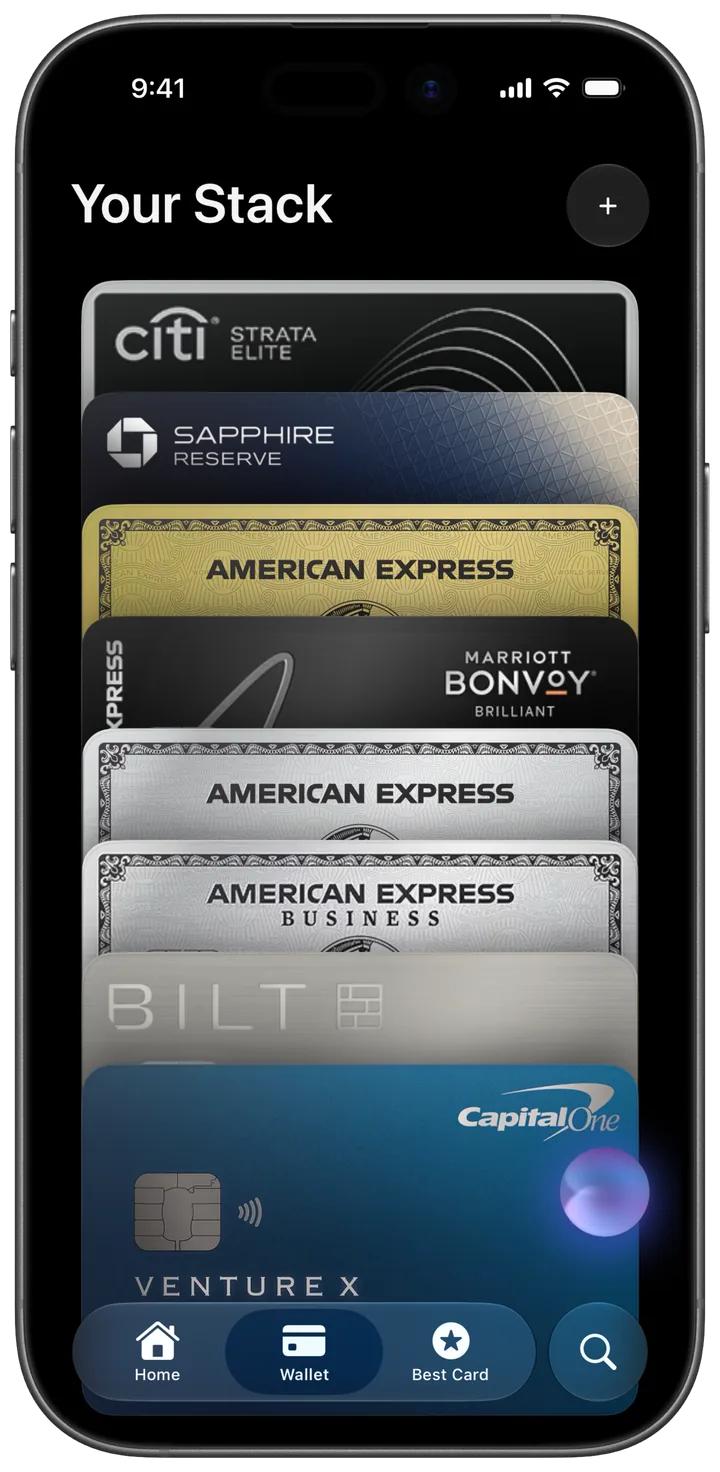
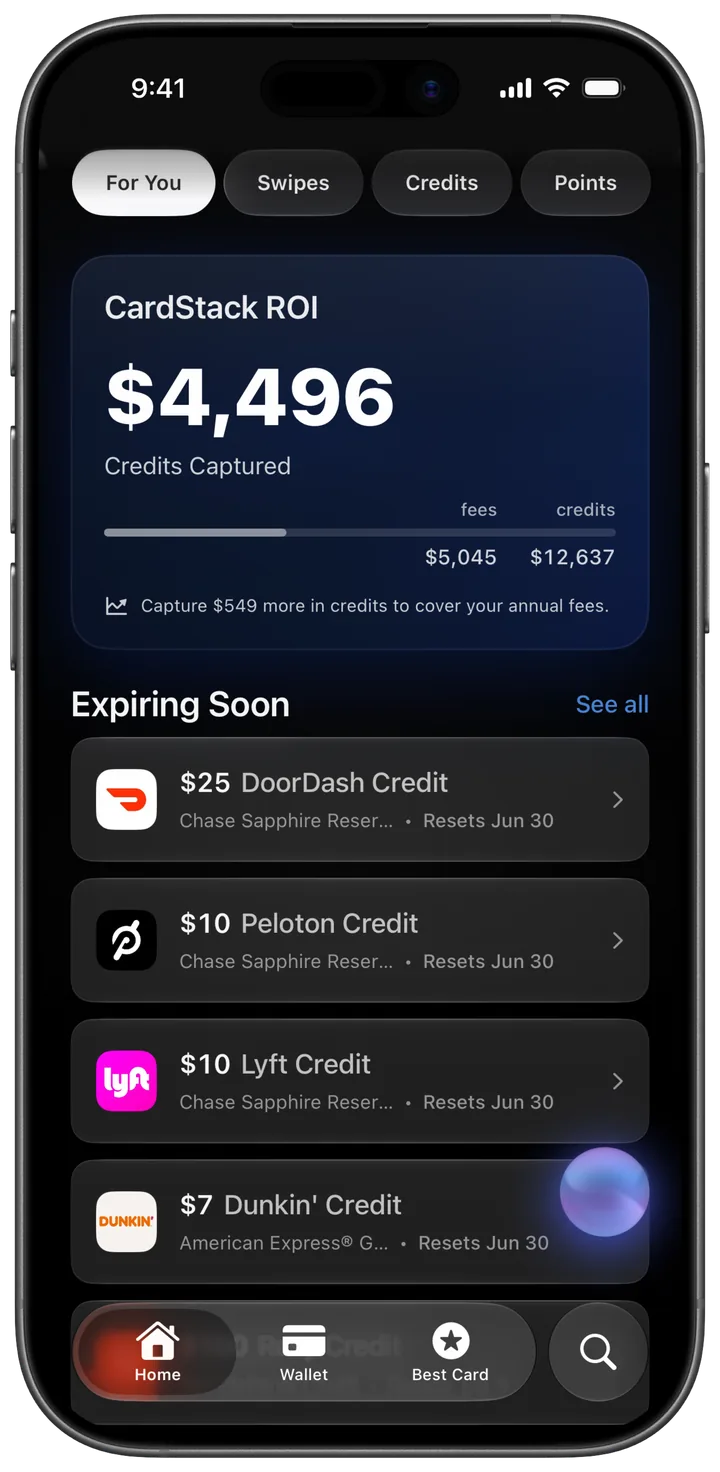
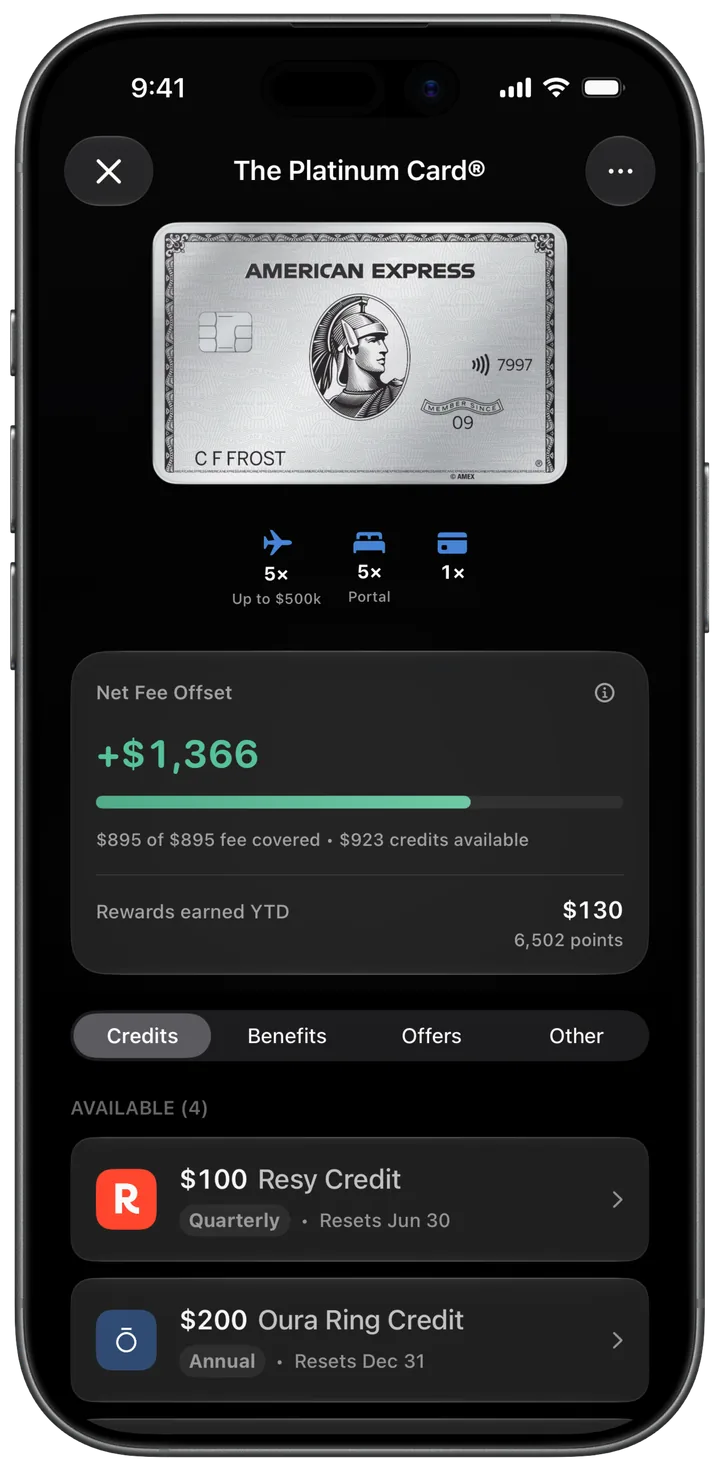
CardStack carries it instead. It knows every credit’s cadence and reset rule for 138 supported cards, shows what’s used versus still available in the current period, and reminds you before each window closes. With CardStack+ and read-only Plaid sync, credits mark themselves used when they post — so the twelve deadlines on your Platinum become zero deadlines, and the effective-fee math updates itself all year.
Cadence is the banks’ edge. Tracking is yours.
Maximize Your Credit Card Rewards
CardStack automatically tracks your benefits, activates your Amex and Chase offers, and shows you the best card at checkout so you can save more money and earn more points.


CardStack Insiders
Newsletter
Card news, standout deals, and product updates—straight to your inbox.
By signing up, you agree to our Terms and Privacy Policy. Unsubscribe anytime.
Read Next
Related articles