Chase Sapphire Preferred vs Amex Gold (2026): The $300 Card Showdown
Two of the best mid-tier rewards cards go head to head. Which one earns more, has better credits, and fits your spending?

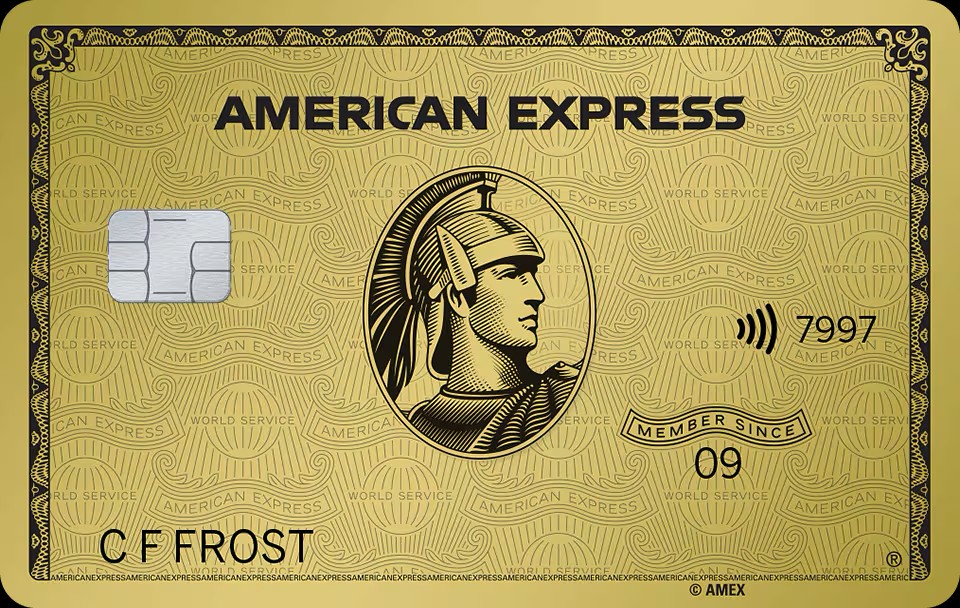
The Chase Sapphire Preferred and the Amex Gold are the two most popular mid-tier rewards cards in the US, and the comparison is closer than you might expect. One costs $95. The other costs $325. And somehow, the more expensive card might actually cost you less.
These cards are competing for the same wallet slot — the primary everyday spending card for someone who eats out, buys groceries, and wants to earn transferable points without paying $800+ for a premium card. Here is how they actually compare.
TL;DR
- Annual fee: CSP $95 vs Amex Gold $325 — but the Gold has up to $424 in annual credits
- Earning: CSP 3x dining / 2x travel vs Gold 4x dining / 4x groceries — the Gold earns more where most people spend
- Credits: CSP has a $50 hotel credit vs Gold has $120 Uber Cash + $120 dining + $100 Resy + $84 Dunkin’ + $100 Hotel Collection
- Both have excellent transfer partner ecosystems (Chase UR vs Amex MR)
- The Gold wins for foodies and grocery shoppers; the CSP wins for travelers and those who want simplicity
- They pair exceptionally well together in a mixed wallet
The Side-by-Side Basics
| Chase Sapphire Preferred | Amex Gold | |
|---|---|---|
| Annual fee | Chase Sapphire Preferred$95 | Amex Gold$325 |
| Dining earn rate | Chase Sapphire Preferred3x UR | Amex Gold4x MR |
| Grocery earn rate | Chase Sapphire Preferred1x UR | Amex Gold4x MR (up to $25K/yr) |
| Travel earn rate | Chase Sapphire Preferred2x UR | Amex Gold1x MR (3x flights on amextravel.com) |
| Streaming | Chase Sapphire Preferred1x UR | Amex Gold1x MR |
| Everything else | Chase Sapphire Preferred1x UR | Amex Gold1x MR |
| Transfer partners | Chase Sapphire Preferred13 | Amex Gold20+ |
| Sign-up bonus | Chase Sapphire Preferred60,000 UR (typical) | Amex Gold60,000 MR (typical) |
| Annual credits | Chase Sapphire Preferred$50 hotel | Amex Goldup to $424 (Uber + dining + Resy + Dunkin’ + Hotel Collection) |
Round 1: The Real Cost
The sticker price difference is $230. But sticker price is misleading on the Gold.
Chase Sapphire Preferred at $95: A $50 annual hotel credit (applied automatically to Chase Travel hotel bookings) brings the effective fee to $45. Simple, clean, easy to use. No monthly or quarterly deadlines.
Amex Gold at $325: The credits stack up: $120 Uber Cash ($10/month), $120 dining credit ($10/month at Grubhub, The Cheesecake Factory, Five Guys, Buffalo Wild Wings, and Wonder), $100 Resy dining credit ($50 semiannually), plus $84 Dunkin’ and $100 Hotel Collection if you use them. The three most-used credits alone total $340 — already enough to offset the fee. Use everything and you are at $424 against $325.
| CSP | Amex Gold | |
|---|---|---|
| Annual fee | CSP$95 | Amex Gold$325 |
| Credits (realistic) | CSP-$50 | Amex Gold-$300 |
| Effective fee | CSP$45 | Amex Gold$25 |
For someone who uses Uber and eats out, the two cards cost almost the same after credits. The Gold requires more active management (monthly credits, semiannual Resy), but the per-dollar effort is rewarded.
Advantage: Draw on effective fee for active users. The CSP wins on simplicity. The Gold wins on total credits but demands more attention.
Round 2: Earning Rates
This is where the Gold pulls ahead for most people’s spending patterns.
The average American household spends roughly $10,000 per year on groceries and $5,000 on dining. On those two categories alone:
| Category | CSP Earn | Amex Gold Earn | Difference |
|---|---|---|---|
| CategoryGroceries ($10,000) | CSP Earn10,000 UR (1x) | Amex Gold Earn40,000 MR (4x) | Difference+30,000 points for Gold |
| CategoryDining ($5,000) | CSP Earn15,000 UR (3x) | Amex Gold Earn20,000 MR (4x) | Difference+5,000 points for Gold |
| CategoryTravel ($3,000) | CSP Earn6,000 UR (2x) | Amex Gold Earn3,000 MR (1x) | Difference+3,000 points for CSP |
| CategoryEverything else ($20,000) | CSP Earn20,000 UR (1x) | Amex Gold Earn20,000 MR (1x) | DifferenceTie |
| CategoryTotal | CSP Earn51,000 UR | Amex Gold Earn83,000 MR | Difference+32,000 for Gold |
The Gold earns 32,000 more points per year in this scenario, almost entirely because of the 4x grocery rate. If you spend heavily on groceries and dining — which most households do — the Gold’s earning advantage is significant.
The CSP’s edge is travel, where it earns 2x on a broad definition that includes hotels, flights, taxis, trains, and tolls. The Gold only earns well on flights booked through Amex Travel (3x). For someone whose travel spend is high relative to food, the CSP narrows the gap.
Advantage: Amex Gold for most spending patterns. The 4x grocery multiplier is the single most impactful earn rate on either card.
Round 3: Transfer Partners
Both cards feed into premier points ecosystems with strong transfer partners.
Chase Ultimate Rewards (13 partners): United, Southwest, Hyatt, British Airways, Air France/KLM, Virgin Atlantic, IHG, and others. The standout is World of Hyatt — consistently the best hotel redemption value in the loyalty space. A Hyatt room that costs $400/night can redeem for 15,000-25,000 points.
Amex Membership Rewards (20+ partners): Delta, Air Canada Aeroplan, ANA, Singapore Airlines, British Airways, Emirates, Marriott Bonvoy, Hilton Honors, and more. The list is deeper, with more airline partners and particularly strong options for international premium cabin redemptions.
Both programs regularly offer transfer bonuses (20-40% extra points to specific partners), and both have a baseline redemption value of roughly 1.5-2 cents per point through strategic transfers.
Advantage: Draw. Amex has more partners. Chase has Hyatt. Depending on how you redeem, either can be the better program.
Round 4: Sign-Up Bonuses
Both cards typically offer 60,000-point sign-up bonuses with a $4,000-$6,000 spending requirement in the first 3-6 months. The bonuses fluctuate, and both issuers occasionally run elevated offers of 75,000-80,000 points.
At comparable redemption values (~2 cpp), a 60,000-point bonus is worth approximately $1,200 in travel. This is a significant chunk of value in the first year and can swing the comparison for year one.
Advantage: Check current offers. Whichever card has the higher bonus at the time you apply has the edge for year one. Long-term, the annual earning and credit structure matters more.
Round 5: Acceptance and Ecosystem
This is an underrated differentiator.
Chase Sapphire Preferred is a Visa. Accepted virtually everywhere globally. No merchant is going to turn this card away. It also fits cleanly into the Chase ecosystem — pair it with the Freedom Unlimited (1.5x on everything) and Freedom Flex (5x rotating categories) for a no-annual-fee trifecta.
Amex Gold runs on the American Express network. Acceptance is excellent in the US and major international cities, but there are still merchants — particularly small businesses, some international vendors, and some online retailers — that do not take Amex. It pairs naturally with the Amex Platinum and Blue Business Plus for the Amex trifecta.
If you travel internationally to places where Amex acceptance is spotty, carrying a Visa backup is essential. The CSP can be that card, or you need a second card in your wallet.
Advantage: CSP. Visa acceptance is universal. Amex is close but not quite there, especially outside the US.
The Effective Annual Fee Deep Dive
The concept of effective annual fee is crucial for this comparison. It is the fee minus the credits you actually use.
| Scenario | CSP Effective Fee | Amex Gold Effective Fee |
|---|---|---|
| ScenarioUse all credits | CSP Effective Fee$45 | Amex Gold Effective Fee-$15 |
| ScenarioUse most credits (80%) | CSP Effective Fee$55 | Amex Gold Effective Fee$53 |
| ScenarioUse some credits (50%) | CSP Effective Fee$70 | Amex Gold Effective Fee$155 |
| ScenarioUse no credits | CSP Effective Fee$95 | Amex Gold Effective Fee$325 |
If you are the kind of person who sets up autopay and forgets about credits, the CSP’s simplicity wins. Its $50 hotel credit applies automatically. The Gold’s credits require monthly Uber usage, dining at specific merchants, and semiannual Resy bookings. Miss a few months and the Gold’s effective fee climbs quickly.
Who Should Choose the Chase Sapphire Preferred
- Travelers who want a solid earn rate on travel (2x) and dining (3x) with a simple fee structure
- People who prefer Visa acceptance and no merchant limitations
- Cardholders already in the Chase ecosystem (pair with Freedom cards)
- Anyone who values simplicity and does not want to track monthly credits
- World of Hyatt loyalists who want to stack UR points for hotel redemptions
- Budget-conscious rewards users who want a premium card at $95
Who Should Choose the Amex Gold
- Foodies and grocery shoppers who want the highest earn rates in those categories (4x)
- People who use Uber or Uber Eats regularly (the $120 credit covers itself)
- Cardholders who dine at Resy restaurants and can use the semiannual credit
- Anyone planning to build an Amex trifecta with the Platinum and Blue Business Plus
- People who value the depth of the Membership Rewards transfer partner network
- Those willing to manage monthly and semiannual credits in exchange for a near-zero effective fee
Can You Hold Both?
Yes, and it is a genuinely strong pairing. The two cards complement each other well:
- Amex Gold: dining (4x) and groceries (4x)
- CSP: travel (2x), Visa backup for Amex-unfriendly merchants, Hyatt access
Combined fees of $420. Combined credits of ~$390. Combined earning of 3x-4x on your highest-spend categories. Two separate points currencies with two excellent transfer partner ecosystems. You lose the simplicity of a single issuer, but you gain category coverage and network redundancy.
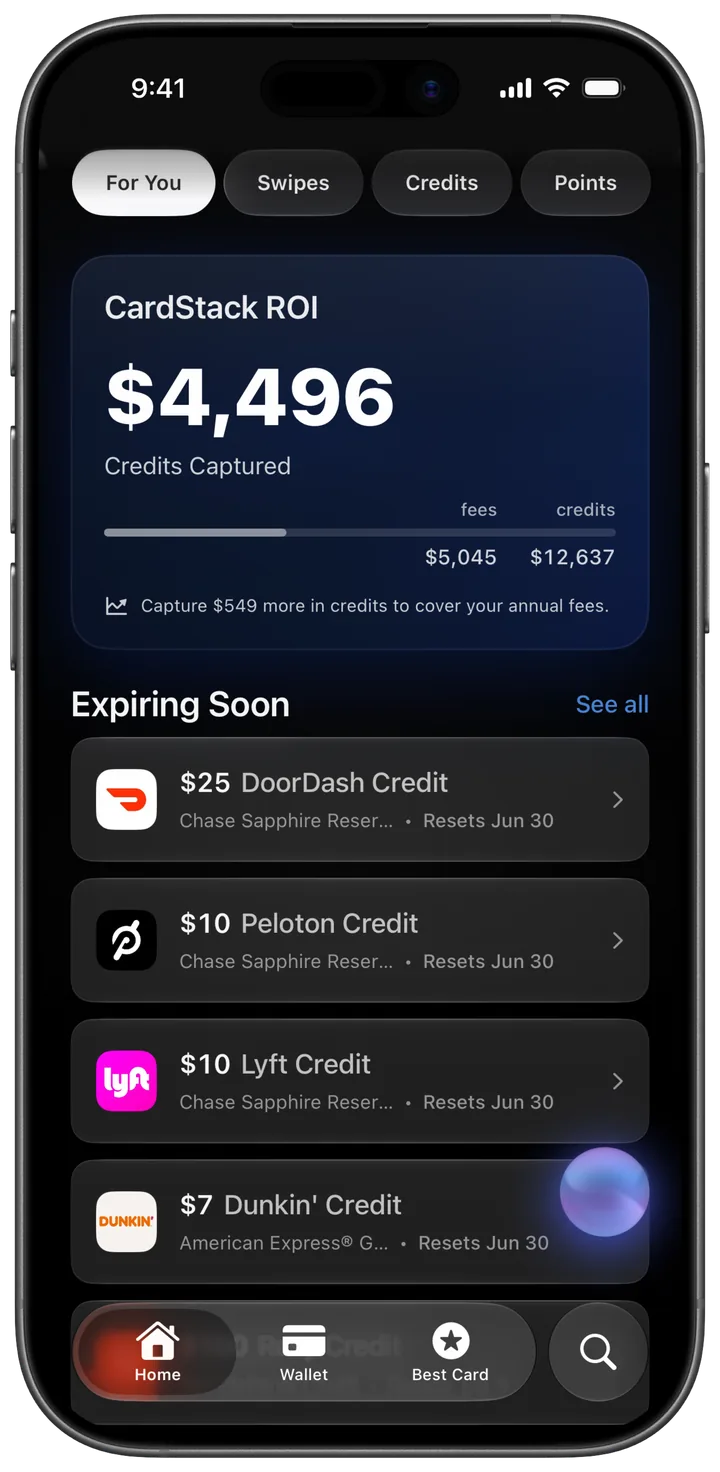
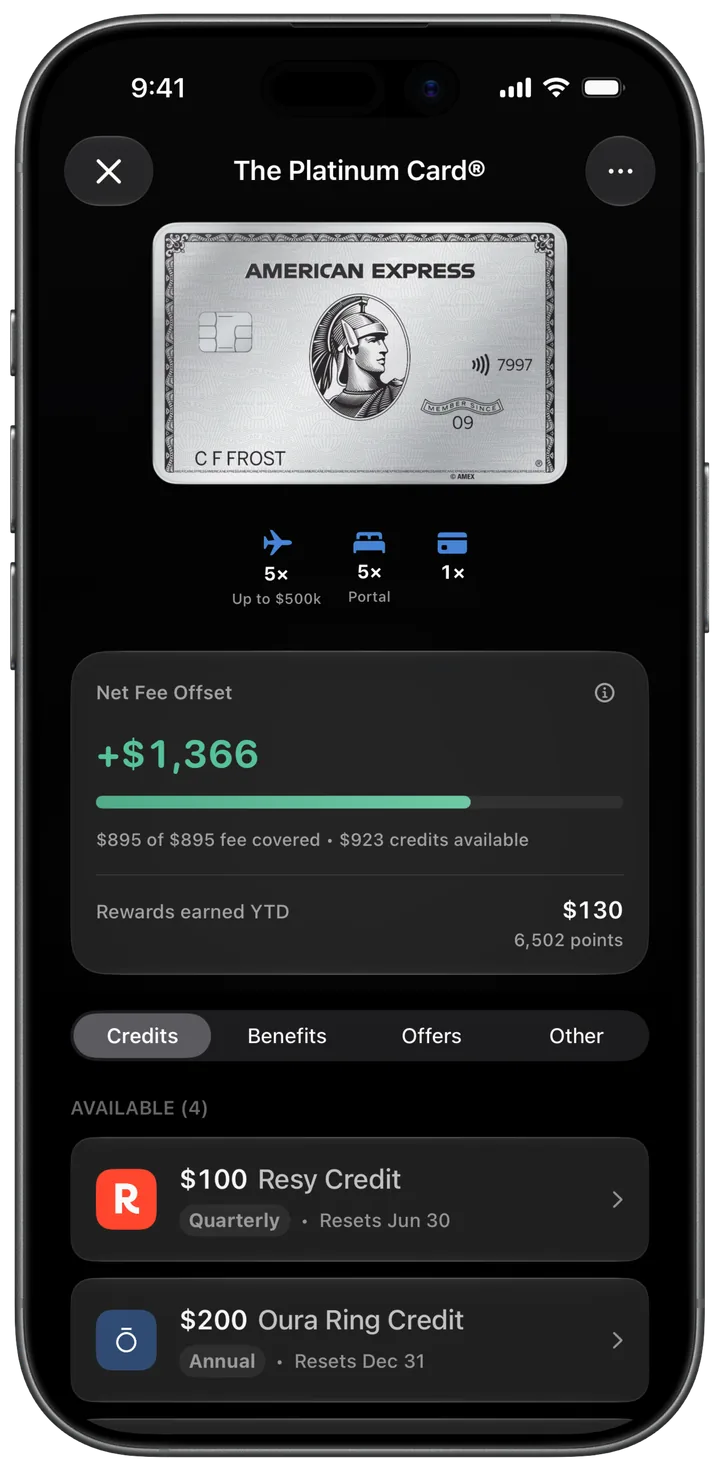
The trade-off is managing two apps, two bills, and two points balances. If you are running a multi-card setup like this, CardStack tracks your credits across both cards and tells you which one to pull at each merchant — which eliminates the biggest friction point of holding cards from different issuers.
For a complete walkthrough of multi-card strategies, see the best 3-card setups for 2026.
Final Verdict
The Amex Gold earns more. The CSP costs less effort.
If you eat out regularly, buy groceries, and are willing to manage monthly credits, the Gold delivers more points and effectively pays for itself. If you want a clean, simple travel card with universal acceptance and a $45 effective fee, the CSP is the safer, easier choice.
Both cards are excellent. Neither is wrong. The decision comes down to whether you see credit management as a worthwhile five minutes per month or an annoyance you would rather skip.
Run the numbers for your own spending with the annual fee calculator to see which card comes out ahead for your specific situation.
Maximize Your Credit Card Rewards
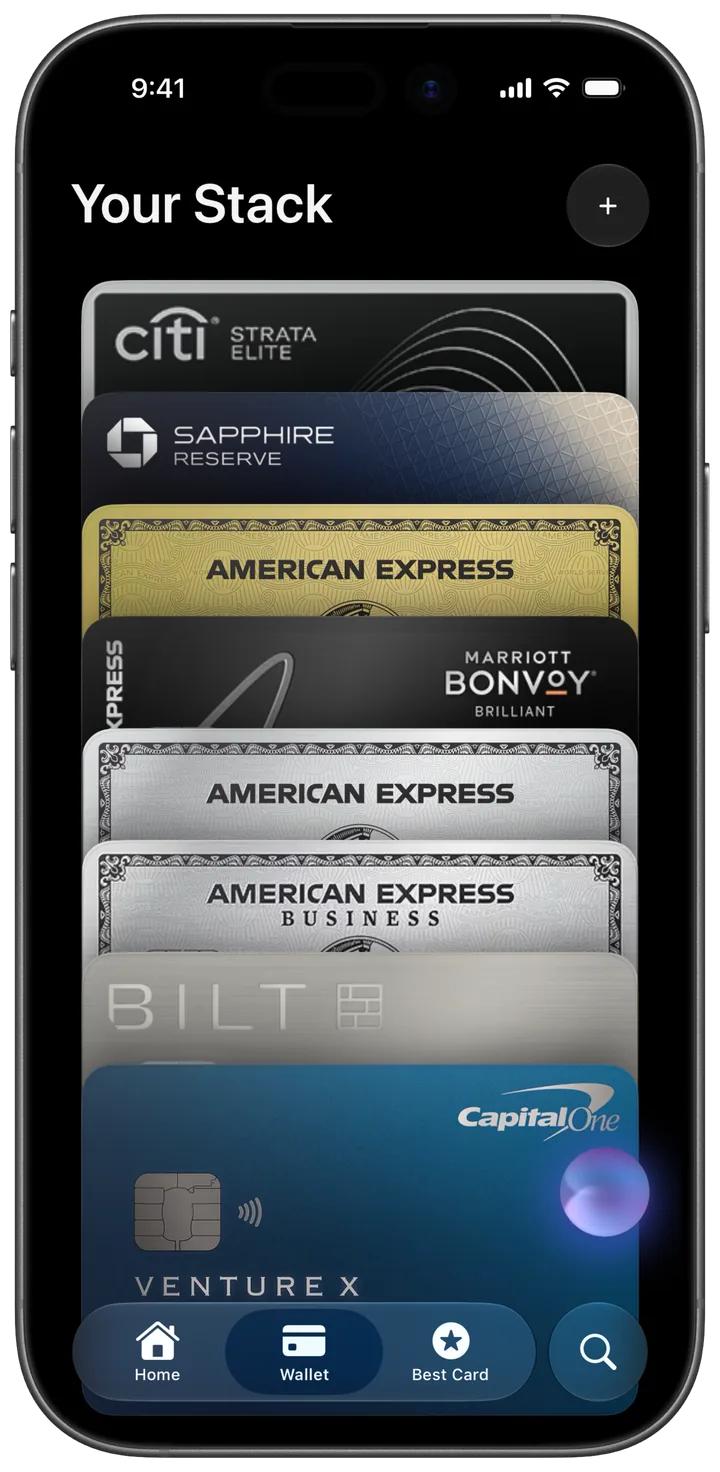
CardStack automatically tracks your benefits, activates your Amex and Chase offers, and shows you the best card at checkout so you can save more money and earn more points.


CardStack Insiders
Newsletter
Card news, standout deals, and product updates—straight to your inbox.
By signing up, you agree to our Terms and Privacy Policy. Unsubscribe anytime.
Read Next
Related articles