Amex Platinum vs Capital One Venture X (2026): Which Premium Card Wins?
Side-by-side comparison of the two top premium travel cards. Fees, credits, lounges, earning rates, and who each card is best for.


The Amex Platinum and the Capital One Venture X represent two fundamentally different philosophies for a premium travel card. One costs $895 and buries you in credits. The other costs $395 and keeps things simple. Both give you lounge access, both earn well on travel, and both have legitimate arguments for why they belong in your wallet.
The question is not which card is better. It is which card is better for you.
TL;DR
- Annual fee: Platinum $895 vs Venture X $395
- The Platinum has ~$2,984 in current statement credits; the Venture X has ~$400 in credits plus 10,000 anniversary miles
- Lounge access: Centurion Lounges + Priority Pass vs Capital One Lounges + Priority Pass + Plaza Premium
- Earning: Platinum 5x on flights/hotels (booked direct or Amex Travel) vs Venture X 2x on everything, 10x hotels and 5x flights through Capital One Travel
- The Venture X is the better value on paper. The Platinum is the better card if you can actually use the credits
- For many people, holding both is the strongest play
The Side-by-Side Basics
| Amex Platinum | Capital One Venture X | |
|---|---|---|
| Annual fee | $895 | $395 |
| Everyday earn rate | 1x | 2x |
| Flights (direct) | 5x MR | 2x miles |
| Flights (portal) | 5x MR | 5x miles |
| Hotels (portal) | 5x MR | 10x miles |
| Transfer partners | 20+ | 18+ |
| Lounge network | Centurion + Priority Pass + Delta Sky Club | Capital One Lounges + Priority Pass + Plaza Premium |
| Travel credit | $200 airline fee (restricted) | $300 travel (broad) |
| Anniversary bonus | None | 10,000 miles (~$100) |
| Hotel status | Hilton Gold + Marriott Gold | None |
| Travel protections | Secondary rental car | Primary rental car |
Round 1: The Fee and How to Offset It
This is where the conversation starts and, for many people, where it ends.
The Venture X costs $395. After the $300 travel credit (which applies to almost any travel purchase booked through Capital One Travel) and the 10,000 anniversary miles (worth ~$100 at 1 cpp), the effective annual fee is roughly negative $5. The card essentially pays for itself before you earn a single point on purchases. That is not marketing math — that is real, straightforward value.
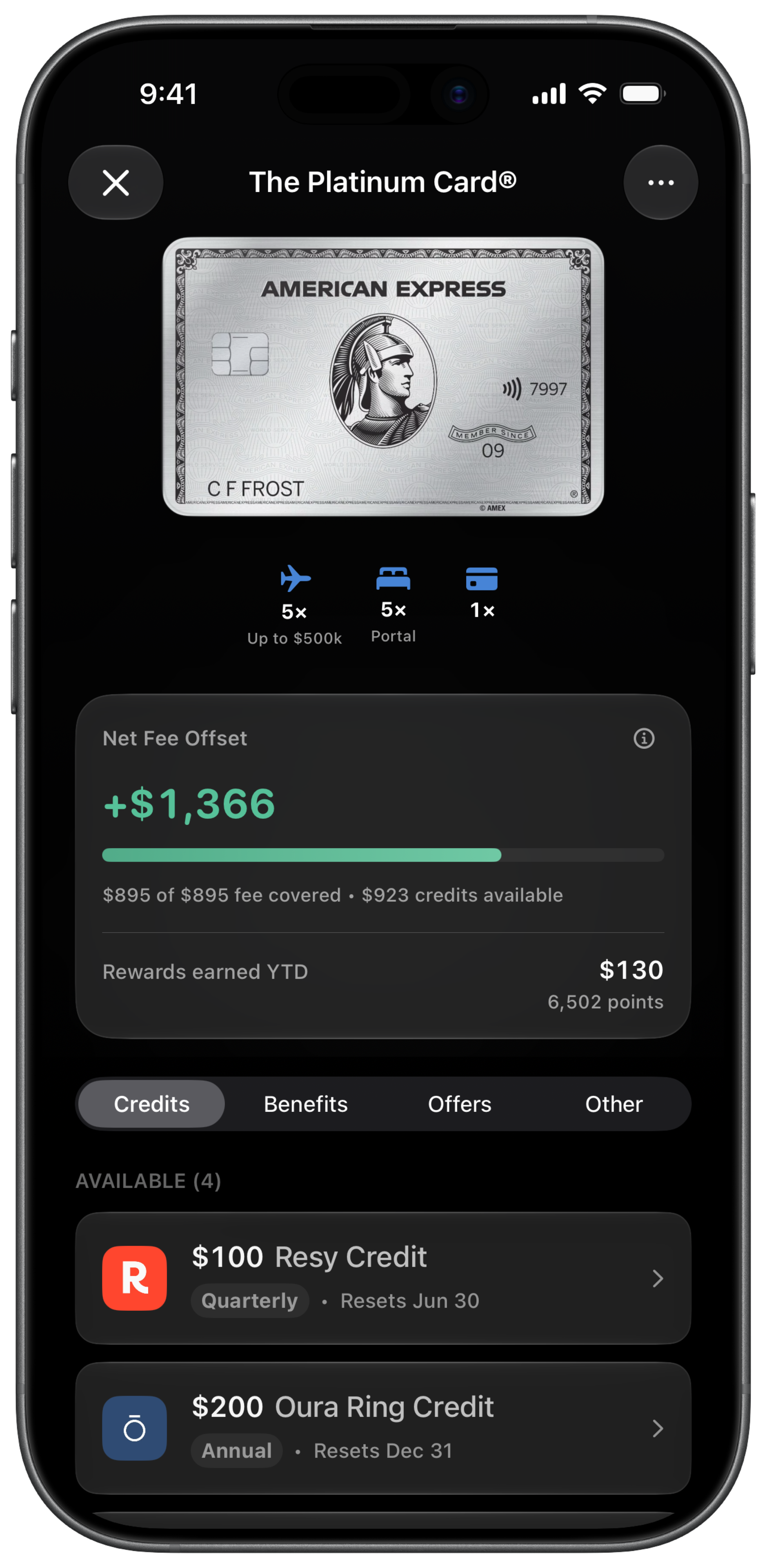
The Amex Platinum costs $895. The card carries $2,984 in current annual statement credits: $600 hotel, $400 Resy dining, $300 digital entertainment, $300 Equinox, $300 Lululemon, $200 Uber Cash, $200 airline fee, $209 CLEAR, $200 Oura Ring, $155 Walmart+, and $120 Uber One. The former $100 Saks benefit ended June 30, 2026 and is no longer redeemable. Most cardholders realistically use $1,500 to $2,200 worth of the active credits. That still puts the effective fee well below the sticker price — but it requires active management across monthly, quarterly, and semi-annual deadlines.
Advantage: Venture X. The math is not close on simplicity. The Venture X’s fee offsets itself with no effort. The Platinum’s fee offset requires you to track and use a dozen different credits across different cadences. The Platinum can deliver more total value, but only if you put in the work.
Round 2: Lounge Access
Both cards provide lounge access. The networks are different, and neither is strictly better.
Amex Platinum gives you Centurion Lounges (the gold standard for domestic premium lounges), Priority Pass Select, and 10 complimentary Delta Sky Club visits per year. Centurion Lounges serve real food and craft cocktails. The downside is overcrowding at major hubs — JFK, LAX, and Miami can have significant wait times during peak travel.
Capital One Venture X gives you Capital One Lounges, Priority Pass Select, and Plaza Premium lounges. Capital One’s own lounges are newer, well-designed, and less crowded. The food and drink quality rivals Centurion Lounges. The limitation is coverage — there are fewer Capital One Lounges (Dallas-Fort Worth, Denver, Dulles, with more opening), so your home airport may not have one.
Advantage: Depends on your airports. If you fly through Centurion Lounge cities, the Platinum wins. If your home airport has a Capital One Lounge or you fly through DFW or Denver regularly, the Venture X’s lounge experience is arguably better right now because it is less crowded. Both cards share Priority Pass as a baseline.
Round 3: Earning Rates
The earning structures are almost opposite.
The Platinum earns 5x on flights booked directly with airlines or through Amex Travel, and 5x on prepaid hotels through Amex Travel. Everything else — groceries, gas, dining, streaming, online shopping — earns 1x. The card is a travel specialist with no everyday earning power.
The Venture X earns 2x miles on everything, everywhere, with no category restrictions. Book through Capital One Travel and you get 5x on flights and 10x on hotels. The floor is 2x, which means your worst earn rate on the Venture X is double what the Platinum earns on most purchases.
For someone spending $50,000 per year with $8,000 on flights and $5,000 on hotels:
| Amex Platinum | Capital One Venture X | |
|---|---|---|
| Flights ($8,000) | 40,000 MR (5x direct) | 16,000 miles (2x direct) or 40,000 (5x portal) |
| Hotels ($5,000) | 25,000 MR (5x Amex Travel) | 10,000 miles (2x direct) or 50,000 (10x portal) |
| Everything else ($37,000) | 37,000 MR (1x) | 74,000 miles (2x) |
| Total | 102,000 MR | 100,000–164,000 miles |
The Venture X earns substantially more on everyday spend. The Platinum earns more on flights booked direct. If you are comfortable booking through Capital One Travel, the Venture X can pull ahead even on travel categories.
Advantage: Venture X for total points earned. The 2x floor on everything is powerful. The Platinum only wins if most of your spending is on flights booked directly with airlines.
Round 4: Transfer Partners
Both cards offer competitive transfer partner networks.
Amex Membership Rewards transfers to 20+ partners including Air Canada Aeroplan, ANA, Singapore Airlines, British Airways, Delta SkyMiles, Emirates Skywards, Marriott Bonvoy, and Hilton Honors. The depth is excellent, especially for international premium cabin redemptions.
Capital One Miles transfer to 18+ partners including Air Canada Aeroplan, Turkish Miles & Smiles, British Airways, Singapore Airlines, Emirates Skywards, Avianca LifeMiles, and Wyndham Rewards. The overlap with Amex is significant — many of the most valuable partners (Aeroplan, Singapore, Turkish) appear on both lists.
Both programs regularly offer transfer bonuses of 20% to 40% to specific partners, which can make redemptions even more valuable.
Advantage: Amex, slightly. The Amex list is deeper, particularly for hotel transfers (Marriott and Hilton). But Capital One’s list covers the most popular sweet-spot redemptions through Aeroplan, Turkish, and Avianca LifeMiles. In practice, most people will find what they need on either list.
Round 5: Travel Protections
A significant gap that often gets overlooked.
Capital One Venture X includes primary rental car coverage — you decline the rental counter’s insurance and you are covered directly, no claim through your personal auto insurance. It also includes trip cancellation/interruption, trip delay reimbursement, and baggage delay coverage.
Amex Platinum includes secondary rental car coverage — your personal auto insurance pays first, and Amex covers the remainder. Trip cancellation, trip delay, and baggage protections are present but generally not as strong as Capital One’s offering.
Advantage: Venture X. Primary rental car coverage is a meaningful real-world benefit, especially for frequent car renters. Secondary coverage can affect your personal insurance rates.
Realistic Annual Value Comparison
For a moderate traveler (3-4 trips per year, regular dining, $50K annual spend):
| Amex Platinum | Capital One Venture X | |
|---|---|---|
| Credits used (realistic) | ~$1,800 | ~$400 |
| Anniversary miles | $0 | ~$100 |
| Points earned (est. value) | ~$2,000 | ~$1,800 |
| Annual fee | -$895 | -$395 |
| Net value | ~$2,905 | ~$1,905 |
The Platinum delivers more total value — but requires significantly more effort. The Venture X delivers strong value with almost no management overhead.
For someone who will not track quarterly and semi-annual Amex credits:
| Amex Platinum (passive) | Capital One Venture X | |
|---|---|---|
| Credits used | ~$800 | ~$400 |
| Net value | ~$1,905 | ~$1,905 |
When you stop actively managing the Platinum’s credits, the two cards converge in value — and the Venture X wins on simplicity.
Who Should Choose the Amex Platinum
- Frequent travelers who fly through Centurion Lounge airports
- People who already hold the Amex Gold and want to complete the MR ecosystem
- Cardholders who will actively track and use the full credit portfolio
- Travelers who value Hilton Gold and Marriott Gold status
- Anyone who books luxury hotels through Fine Hotels + Resorts
See the full Amex Platinum review for the detailed credit breakdown.
Who Should Choose the Venture X
- Travelers who want premium lounge access at the lowest possible cost
- People who prefer a simple card with a strong baseline earn rate (2x on everything)
- Anyone who dislikes managing a complex credit schedule
- Cardholders who want primary rental car coverage
- Travelers who book through an issuer portal (5x flights, 10x hotels)
See the full Venture X review for more detail.
The Best of Both Worlds
Here is a setup worth considering: hold both.
The combined fees are $1,290. The combined credits and earning power can exceed $4,000 in annual value. Use the Platinum for flights (5x direct), lounge access, hotel status, and its credit stack. Use the Venture X for everything else (2x floor), its own lounge network, and the simple $300 travel credit.
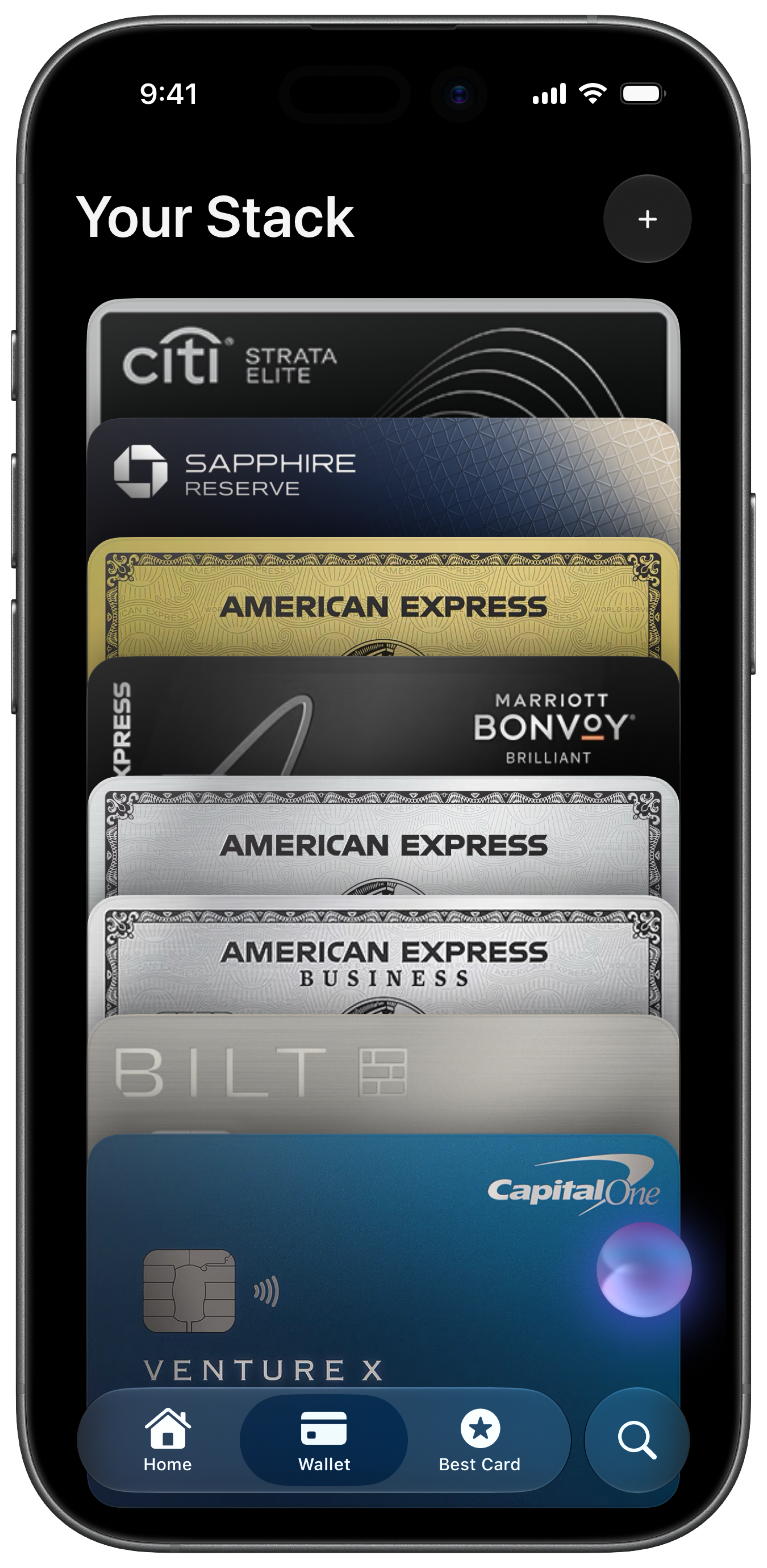
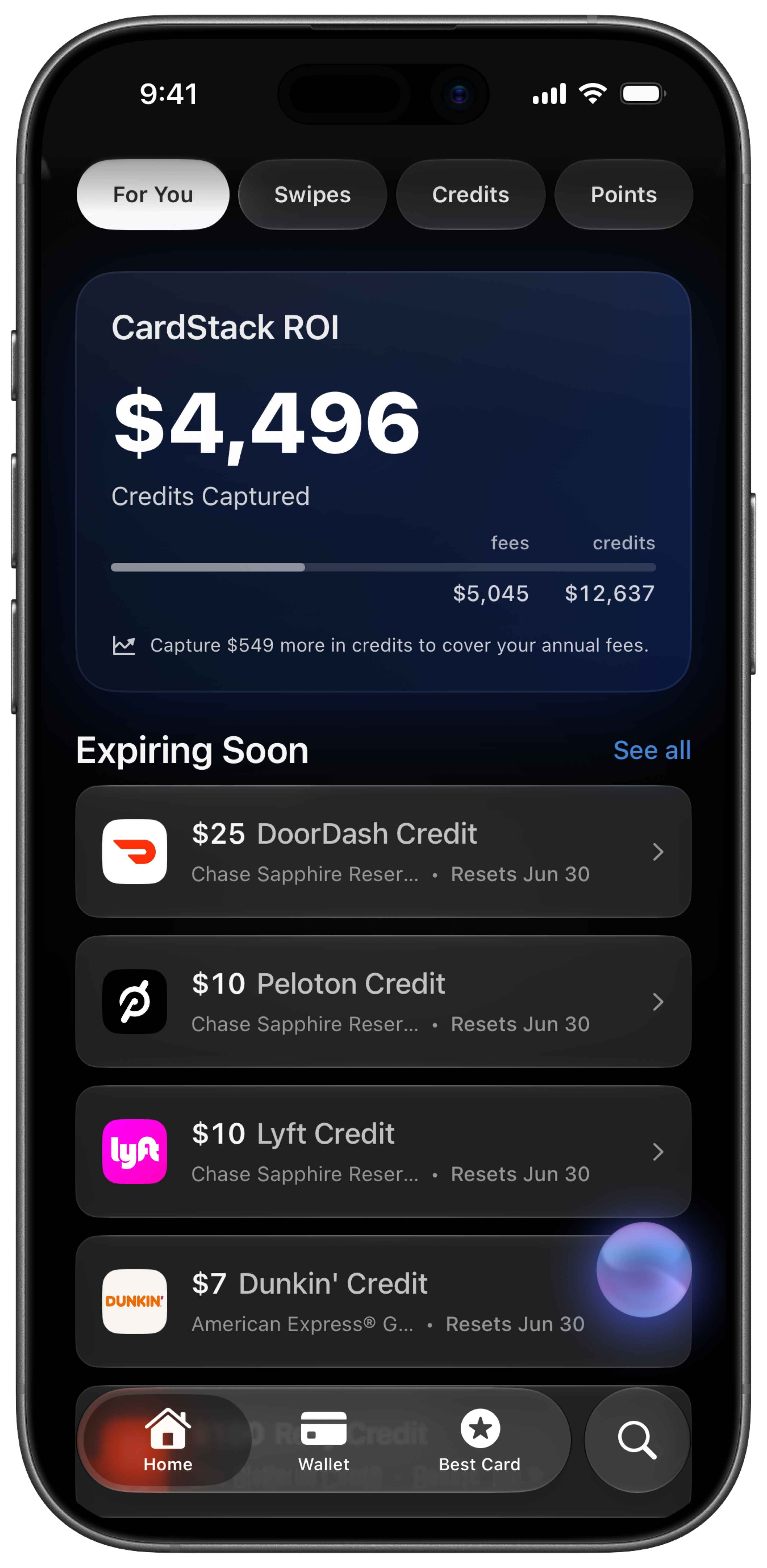
The challenge is managing two premium cards’ worth of credits. This is exactly where CardStack earns its keep — tracking which credits you have used, what is expiring, and what is still available across both cards in one place. Use the annual fee calculator to model whether the combined setup makes sense for your spending.
The two-card approach gives you two lounge networks, two travel credits, a 5x flight rate, a 2x baseline on everything else, and transfer access to 30+ airline and hotel programs. It is one of the strongest premium card combinations available in 2026.
Final Verdict
The Venture X is the better value. The Platinum is the more powerful card.
If you want a premium travel card that pays for itself with zero effort, the Venture X is hard to beat at $395. If you want the deepest credit stack, the best lounge network, and hotel status across two major chains — and you are willing to put in the work to manage it — the Platinum delivers more.
Neither is the wrong choice. The wrong choice is paying $895 for the Platinum and then not tracking the credits that justify the fee.
Get $500+ a year back from your premium cards.
CardStack tracks every credit, offer, and renewal across your wallet so unused perks do not slip past their reset dates.



CardStack Insiders
Newsletter
Card news, standout deals, and product updates—straight to your inbox.
By signing up, you agree to ourTermsandPrivacy Policy. Unsubscribe anytime.
Read Next
Related articles