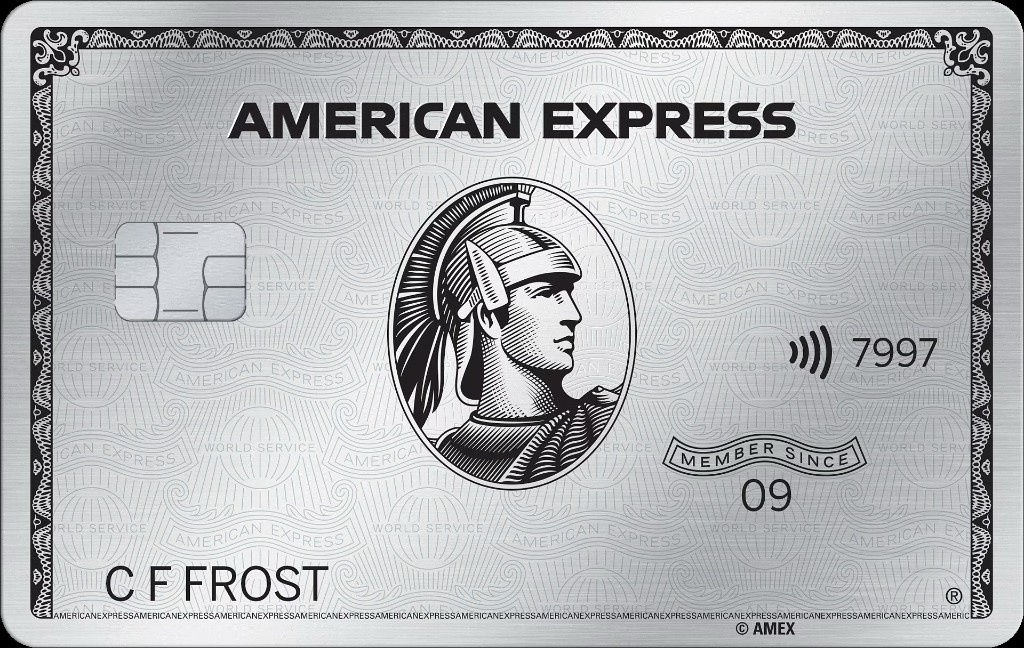
Amex Gold Card Review 2026: The Best Everyday Earner?
The Amex Gold earns 4x on dining and groceries with a $325 fee. Here's the honest math on who it actually makes sense for.


The American Express Gold Card does not try to do everything. It does two things extremely well (dining and groceries) and everything else at 1x. That simplicity is either its biggest selling point or its biggest flaw, depending on how you spend.
At $325 a year, it is the middle child of the Amex premium lineup. Not as heavy as the Platinum at $895. Not as forgettable as a no-fee card. It sits in a specific niche, and it earns its keep for the right person.
TL;DR
- Annual fee: $325
- 4x on dining worldwide and U.S. supermarkets (caps apply)
- Credits: $120 Uber Cash, $120 dining, $100 Resy, $84 Dunkin’, totaling up to $424 in annual credits
- No lounge access
- Best card on the market for people who spend heavily on food
- Works best paired with the Amex Platinum or another travel card for non-food spending
What This Card Actually Does
The Gold is built around one thesis: earn as many Amex Membership Rewards points as possible on food, then use those points for travel.
Earn rates:
- 4x at restaurants worldwide (up to $50,000/year, then 1x)
- 4x at U.S. supermarkets (up to $25,000/year, then 1x)
- 3x on flights booked directly with airlines or through Amex Travel
- 2x on prepaid hotels through Amex Travel
- 1x on everything else
That 4x on dining and groceries is genuinely category-leading. No other transferable points card matches it on both categories simultaneously. If you spend $1,500 a month on food (restaurants, delivery, groceries) you are earning 6,000 points per month before you swipe for anything else.
At TPG’s current valuation of 2 cents per Membership Rewards point, that monthly food spend alone is worth roughly $120 in transferable points.
Breaking Down the $325 Fee
The Gold comes with four credits. They are almost entirely food-focused, which is either perfectly aligned with the card or mildly annoying, depending on your lifestyle.
$120 Uber Cash ($10/month)
Works for Uber rides or Uber Eats. Add the Gold to your Uber account and it runs automatically. If you use Uber at all (even occasionally for food delivery) this credit disappears into your normal life without any effort.
$120 Dining Credit ($10/month)
Statement credit at Grubhub (including Seamless), The Cheesecake Factory, Five Guys, Buffalo Wild Wings, and Wonder — plus Goldbelly and Wine.com through June 30, 2026 (they leave the program July 1). Amex added BWW and Wonder in its April 2026 refresh. The list is still narrow. If you order Grubhub regularly, easy. If you do not, you are either forcing a Buffalo Wild Wings or Five Guys run, ordering through Wonder, or letting the credit expire each month.
$100 Resy Credit ($50 semi-annually)
Dining at Resy-affiliated restaurants in the US. Same dynamic as on the Platinum, genuinely easy if you live in a Resy city and eat out, genuinely useless if you do not.
$84 Dunkin’ Credit ($7/month)
Covers Dunkin’ purchases when you pay with the Gold. If you go to Dunkin’, great. If you do not, this is dead value.
My Realistic Math
The Gold advertises up to $424 in annual credits. Here is what that looks like for an actual person.
| Credit | Annual Value | Realistic Value |
|---|---|---|
| Uber Cash ($120) | $120 | $120 |
| Dining Credit ($120) | $120 | $60 |
| Resy Credit ($100) | $100 | $100 |
| Dunkin’ Credit ($84) | $84 | $0 |
| Hotel Collection ($100) | $100 | $50 |
The dining credit is the one most people partially miss. The partner list is limited and you have to remember to use it monthly. The Dunkin’ credit is the one most people ignore entirely unless they already go there.
Realistically, most Gold holders extract around $280 to $330 in credits, roughly covering the annual fee before you count a single point earned.
Then the points are pure upside.
The Points Are the Real Story
The reason to hold this card is not the credits. The credits get you to roughly break-even on the fee. The points are why you actually want this card.
4x on dining and groceries is exceptional.
If you spend $800/month at restaurants and $600/month on groceries, you are earning 5,600 points per month (roughly 67,000 points per year) on food alone. At 2 cents per point, that is $1,340 in travel value from spending you were going to do anyway.
That is the real math. Not the credits. The points.
The key is how you redeem them. Membership Rewards points are worth very little as statement credits (0.6 cents each) and genuinely excellent as transfer partners (1.5 to 2+ cents each for flights). Air Canada Aeroplan, ANA, and Singapore Airlines are consistently strong transfer options for outsized value. If you are going to redeem for cash or gift cards, you are leaving money on the table.
Use the points-vs-cash calculator to see what your specific balance is worth before you redeem.
What It Is Missing
No lounge access. This is the most common complaint, and it is fair. At $325, you are spending more than the Chase Sapphire Preferred ($95) without getting the lounge access that comes with the Chase Sapphire Reserve ($795) or the Amex Platinum ($895). If airport lounges matter to you, the Gold alone will not get you there.
1x on everything outside food and flights. Gas, online shopping, subscriptions, utilities, all earn one point per dollar. If those categories make up a large part of your spending, you are leaving significant earn rate on the table.
U.S.-only for most credits. The Uber Cash works globally, but the dining credit and Dunkin’ credit are U.S.-only. If you travel internationally for extended periods, the credits stop working.
Where the Marketing Overstates It
The $7 Dunkin’ credit is not a benefit for most people.
It is listed as part of the credit package, and it technically is. But if you are not already a regular Dunkin’ customer, the credit is not going to change your behavior. Amex includes it in the $424 headline value figure. You should subtract it from your personal math.
“4x worldwide dining” sounds bigger than it is for heavy travelers.
The 4x dining does work globally, restaurants in Tokyo, Paris, and London all count. But the grocery 4x is U.S. supermarkets only. If you buy most of your groceries at specialty retailers, international markets, or superstores that Amex does not classify as supermarkets, your effective grocery earn rate may be lower than advertised.
Who This Card Is For
The Gold makes clear sense if you:
- Spend meaningfully on restaurants and groceries every month
- Already use Uber or Uber Eats
- Eat out in cities with Resy-affiliated restaurants
- Plan to transfer points to travel partners rather than redeem for cash
- Are comfortable with a $325 annual fee you can offset through normal spending
- Want to pair it with the Amex Platinum for a complete earning setup, Gold covers food, Platinum covers flights and lounge access
Who Should Skip It
This card is not worth it if you:
- Spend very little on dining and groceries
- Prefer cash back or simpler redemption paths
- Already have a card with strong food earn rates, like the Chase Sapphire Reserve (3x dining) combined with strong grocery coverage elsewhere
- Will not use the Uber Cash or dining credit and need the fee to justify itself through credits alone
- Want lounge access and cannot pair this with a card that provides it
The Two-Card Setup
The Gold is most powerful when it is not your only card.
Paired with the Amex Platinum, it forms a complete wallet: Gold on food and groceries (4x), Platinum on flights (5x) and for credits and lounge access. Every dollar goes to the highest earn rate and the credits across both cards cover both fees. This two-card combination is one of the most optimized setups in the premium travel rewards space.
If you only hold the Gold, you have a strong food card and a mediocre everything-else card. The moment you add a card with solid non-food earn rates, the whole setup clicks.
Final Verdict
The Amex Gold is the best everyday earning card on the market if you spend heavily on food.
4x on dining and groceries is not matched by any other transferable points card. For someone who spends $1,500 or more per month on restaurants and groceries, the card pays for itself in points before you account for a single credit. Add the Uber Cash and Resy credits and the fee is effectively covered.
The limitations are real. No lounge access. A narrow dining credit partner list. A Dunkin’ credit that most people will not use. And 1x on everything outside food and flights, which makes it incomplete as a standalone card.
But as a food-focused points engine, especially paired with the Platinum or another travel card, the Gold is genuinely excellent.
If you eat out regularly, shop for groceries, and plan to transfer points, this card belongs in your wallet.
CardStack Insiders
Newsletter
Card news, standout deals, and product updates—straight to your inbox.
By signing up, you agree to our Terms and Privacy Policy. Unsubscribe anytime.
Read Next
Related articles