
How To Use $300 Travel Credit on Sapphire Reserve [2026]
The Chase Sapphire Reserve $300 travel credit applies automatically to anything that codes as travel: flights, hotels, rideshare, tolls, and parking. Here is what counts and when it resets.
 Chase Sapphire Reserve® Credit Card
 Chase Sapphire Reserve® for Business

| Chase Sapphire Reserve® Credit Card — Annual Travel Credit | Details |
|---|---|
| ItemCards with this credit | Cards with this creditChase Sapphire Reserve® Credit Card, Chase Sapphire Reserve® for Business |
| ItemCredit amount | Credit amount$300 per year |
| ItemMaximum annual value | Maximum annual value$300 |
| ItemResets | ResetsCard anniversary year |
| ItemEnrollment required | Enrollment requiredNo |
| ItemHow it applies | How it appliesAutomatically applied to travel purchases |
| Chase Sapphire Reserve® for Business — Annual Travel Credit | Details |
|---|---|
| ItemCards with this credit | Cards with this creditChase Sapphire Reserve® Credit Card, Chase Sapphire Reserve® for Business |
| ItemCredit amount | Credit amount$300 per year |
| ItemMaximum annual value | Maximum annual value$300 |
| ItemResets | ResetsCard anniversary year |
| ItemEnrollment required | Enrollment requiredNo |
| ItemHow it applies | How it appliesAutomatically applied to travel purchases |
The Chase Sapphire Reserve has a $300 annual travel credit that applies automatically to travel purchases. No enrollment, no specific merchants, no quarterly resets to track. You buy something that codes as travel, and Chase credits it back.
That simplicity is the CSR’s biggest advantage over competing premium cards, especially the Amex Platinum, which spreads its credits across a dozen different merchants and schedules. But “travel” is a broader category than most people realize, and knowing what qualifies can help you use the full $300 even in years when you do not fly much.
TL;DR
- $300 annual credit applied automatically to travel purchases
- Broad definition: flights, hotels, taxis, rideshare, trains, tolls, parking, campgrounds, and more
- Resets on your cardmember anniversary (not the calendar year)
- Effectively reduces the $795 annual fee to $495 before counting other CSR credits
- Also includes complimentary DoorDash DashPass membership
What Counts as Travel
Chase defines “travel” more generously than most people expect. The credit applies to purchases in any of these categories:
| Category | Examples |
|---|---|
| CategoryAirlines | ExamplesFlights, seat upgrades, baggage fees, in-flight purchases |
| CategoryHotels | ExamplesRoom charges, resort fees (when billed by the hotel) |
| CategoryCar rentals | ExamplesHertz, Enterprise, Avis, Turo, etc. |
| CategoryRideshare | ExamplesUber, Lyft |
| CategoryTaxis | ExamplesTraditional taxi charges |
| CategoryTrains and buses | ExamplesAmtrak, commuter rail, city buses, subway charges |
| CategoryTolls | ExamplesHighway tolls, bridge tolls, EZ-Pass charges |
| CategoryParking | ExamplesGarage fees, meters, airport parking, SpotHero |
| CategoryCampgrounds | ExamplesRV parks, campground booking sites |
| CategoryTravel agencies | ExamplesOnline and offline travel agencies |
| CategoryCruises | ExamplesCruise line purchases |
| CategoryTimeshares | ExamplesBooking charges |
The key difference from most card credits: there is no exclusive partner list. Any merchant that processes through a travel-related merchant category code (MCC) qualifies. That means a random hotel in rural Montana triggers the credit just like a Marriott in Manhattan.
What Does NOT Count
Some purchases that feel like travel do not carry a travel MCC:
- Gas stations. Even on a road trip, gas does not code as travel.
- Restaurants at hotels. If the restaurant charges separately from the hotel, it typically codes as dining, not travel.
- Travel insurance purchased separately (some policies do qualify, but it is inconsistent)
- Airbnb. Some Airbnb charges code as travel and trigger the credit, but it depends on how the host’s listing is set up. It is not guaranteed.
- Tourist attractions. Theme parks, museum tickets, and tours usually code as entertainment, not travel.
When in doubt, check your Chase statement. Travel purchases show a “travel” tag, and the credit appears as a separate line item within a few days.
How the Credit Resets
The CSR travel credit resets on your cardmember anniversary, the date you opened the card (or the most recent product change date). This is different from calendar-year credits like the Amex Platinum’s airline fee credit.
Example: If your cardmember year runs from April to March, you have from April 1 through March 31 to use your $300. Any unused amount does not carry over.
You can check your anniversary date and remaining credit balance in the Chase app under Benefits or by calling the number on the back of the card.
CSR Travel Credit vs. Amex Platinum Credits
The Amex Platinum offers about $2,994 in annual credits and Uber Cash, plus a conditional $250 Airbnb Experiences Credit. Its $600 Lodging Credit covers eligible prepaid Fine Hotels + Resorts, The Hotel Collection, and Airbnb Luxe bookings through Amex Travel. The complete Platinum guide explains the separate limits and qualification rules.
| Feature | CSR $300 Travel Credit | Amex Platinum Credits |
|---|---|---|
| FeatureAnnual value before conditional benefits | CSR $300 Travel Credit$300 | Amex Platinum CreditsAbout $2,994 |
| FeatureBenefits in that total | CSR $300 Travel Credit1 | Amex Platinum Credits11, plus conditional Experiences and a multi-year application credit |
| FeatureQualifying merchants | CSR $300 Travel CreditAny travel MCC | Amex Platinum CreditsSpecific partners per credit |
| FeatureReset schedule | CSR $300 Travel CreditAnnual (cardmember year) | Amex Platinum CreditsMonthly, quarterly, semiannual, annual |
| FeatureEffort to use | CSR $300 Travel CreditVery low | Amex Platinum CreditsModerate to high |
| FeatureRealistic redemption rate | CSR $300 Travel Credit~100% | Amex Platinum Credits~50–65% |
The CSR’s advantage is that almost everyone who travels at all, even just by train or Uber, will use the full $300. The Platinum’s advantage is raw volume: if you track and use its credits, the total value is much higher.
For a head-to-head comparison of the full cards, see Amex Platinum vs. Chase Sapphire Reserve.
The DashPass Benefit
The CSR also includes a complimentary DoorDash DashPass membership, which provides:
- $0 delivery fees on DoorDash orders over $12
- Reduced service fees
- Plus $25/month in DoorDash promos through December 2027 (separate from the travel credit)
DashPass normally costs $9.99/month, about $120 a year if paid monthly. While it is not part of the $300 travel credit, it is meaningful value if you order delivery regularly.
Tips for Using the Full $300
Most CSR holders use the travel credit without trying. A few Uber rides or a single flight covers it. But if you are in a year where you are not traveling much, here are ways to make sure you still capture the value.
1. Use it for rideshare
Uber and Lyft charges qualify. If you take even a handful of rides per year, put them on the CSR. Ten $30 Uber rides over the course of a year is $300.
2. Pay for parking with your CSR
Garage parking, airport parking, and meter payments through apps like SpotHero all qualify. If you drive and park regularly, this adds up quickly.
3. Put tolls on your CSR
If your EZ-Pass or toll account is linked to your CSR, those charges qualify. Commuters on toll roads can use up the $300 credit in the first few months of the year.
4. Book one trip
A single domestic flight or a one-night hotel stay often exceeds $300. One booking and you are done for the year.
5. Use public transit
Commuter rail, subway fare cards, and bus charges all qualify. If you commute by public transit, load your fare card with your CSR.
6. Track your progress
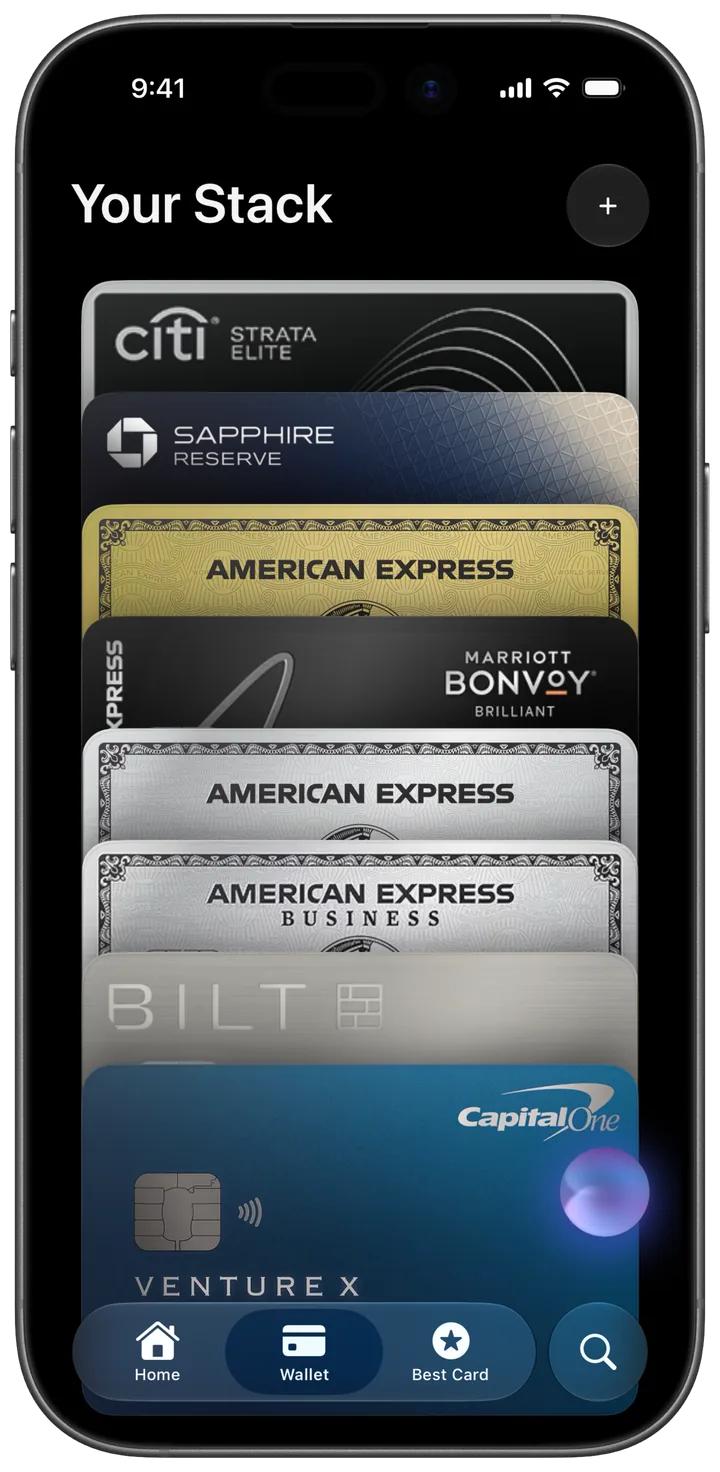
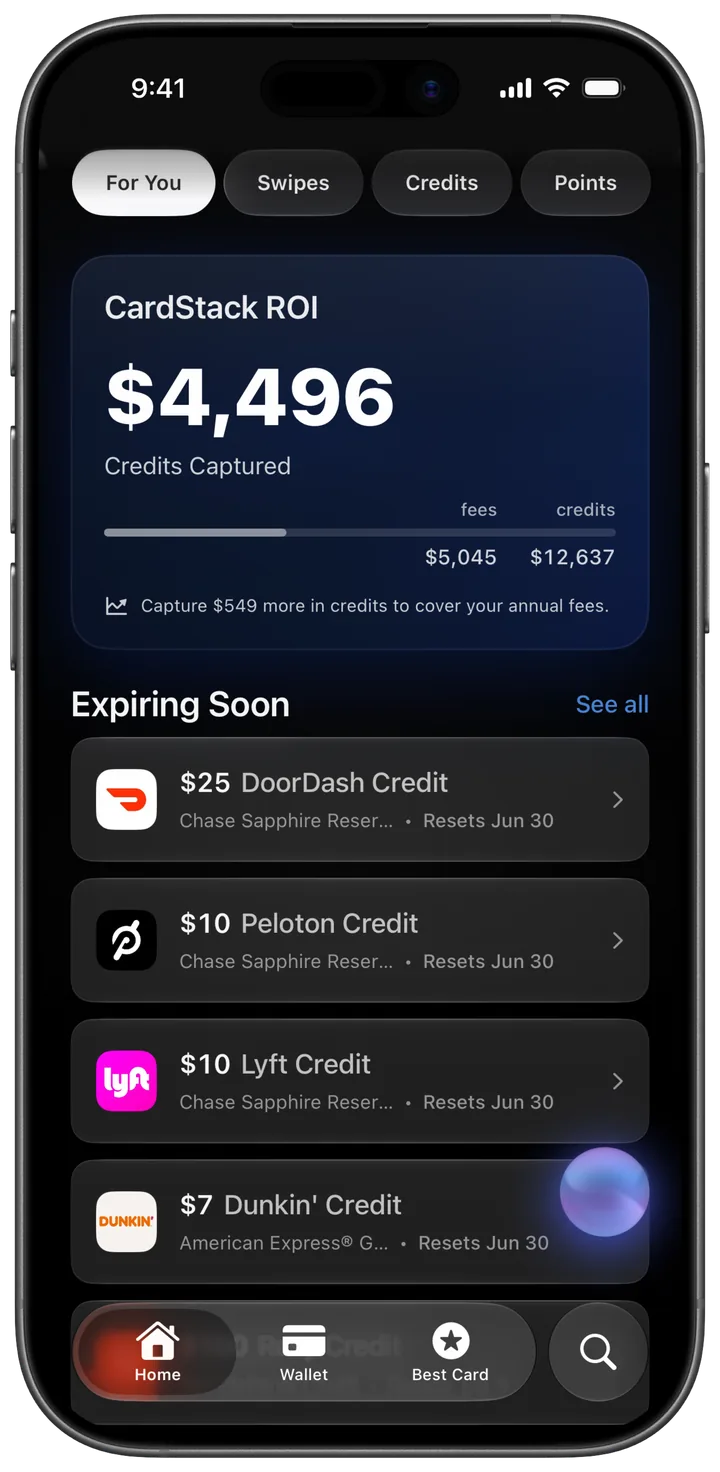
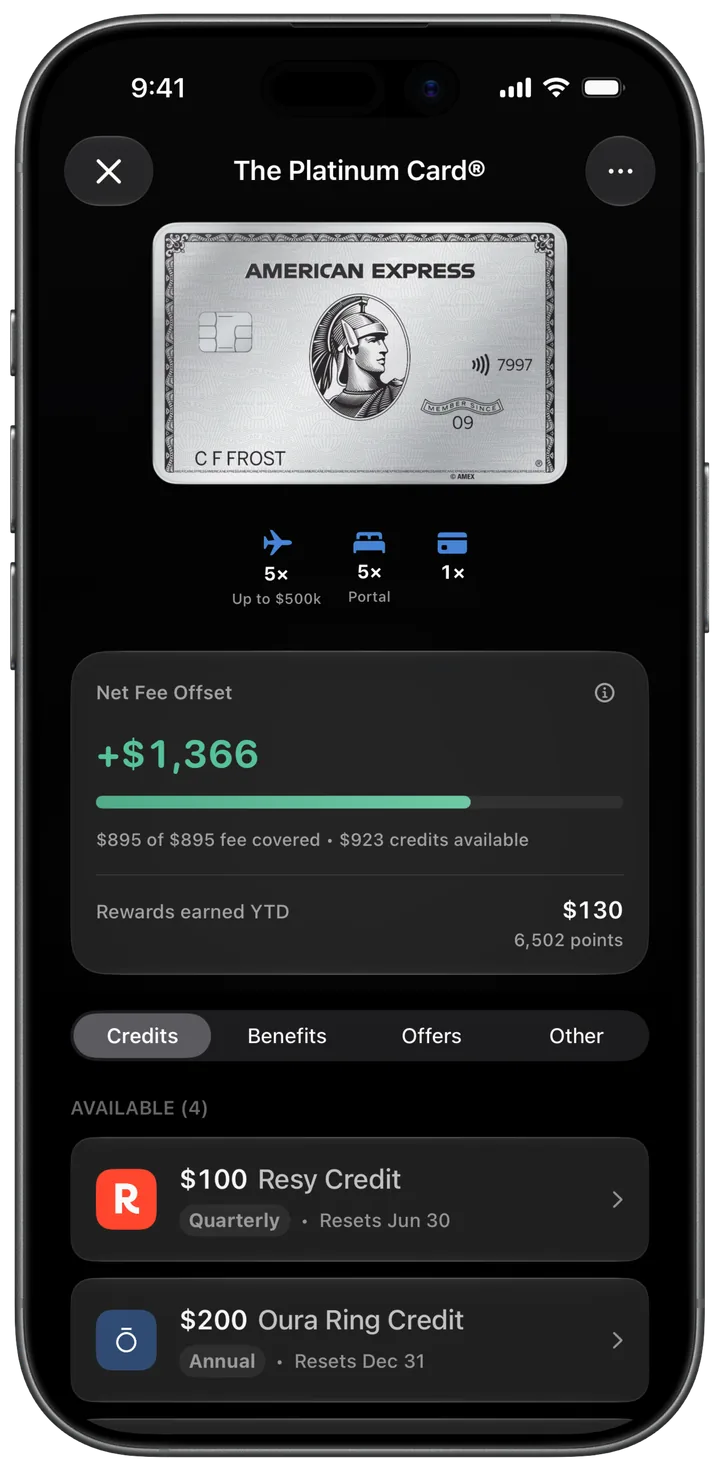
The Chase app shows your remaining credit balance, but CardStack consolidates it alongside credits from your other cards so you can see your full picture in one place. If you hold both the CSR and cards with more complex credit structures, having a single dashboard keeps you from losing track.
The Real Math on the CSR Fee
The $300 travel credit is the easiest piece to subtract from the current $795 annual fee:
| Item | Value |
|---|---|
| ItemAnnual fee | Value–$795 |
| ItemTravel credit | Value+$300 |
| ItemDashPass value | Value+$120 |
| ItemAfter travel credit + DashPass | Value$375 |
That $375 figure is before the CSR’s other statement credits: The Edit hotels ($500), DoorDash promos ($300), dining ($300), entertainment ($300), Apple TV + Music ($288), and others. Most holders who travel a few times a year extract $1,500 to $1,800 in total credits against the $795 fee.
At that level, you are paying for Priority Pass and Chase Sapphire Lounge access, 3x on dining, 4x on direct flights and hotels, transfers to World of Hyatt, and Points Boost, which gives up to 2x value when redeeming points for select hotels and flights through Chase Travel.
That is a strong deal. That is why the CSR remains one of the most recommended premium travel cards, even though the Amex Platinum offers more raw credit value.
Is it worth it?
The Chase Sapphire Reserve’s $300 travel credit is the easiest premium card credit to use. The definition of “travel” is broad, it applies automatically, and it resets once a year. If you take a single trip, use rideshare, pay for parking, or ride public transit, you will use it without trying.
Combined with DashPass and the CSR’s earning rates, the $300 travel credit alone brings the sticker fee from $795 down to $495, and the card’s broader credit stack can push the effective cost much lower. For the full card review, see the Chase Sapphire Reserve review for 2026.
Frequently Asked Questions
Can the travel credit be used on any travel purchase?
Yes, on anything that processes under a travel merchant category. You don’t have to book through Chase Travel. A flight bought directly from the airline, an Uber, a parking garage, and a toll charge all qualify the same way.
How do I check how much of the $300 I have left?
The Chase app and website show your remaining credit under the card’s benefits section. The credit posts as a separate line item on your statement within a few days of each qualifying charge, so your statement also shows what’s been credited so far. The CardStack app shows your remaining CSR travel credit next to every other credit in your wallet.
Do travel gift cards trigger the credit?
The credit applies by merchant category, so it depends on how the seller processes the charge. Chase’s published terms don’t address gift cards specifically, so don’t count on it.
Does the Sapphire Reserve for Business have the same credit?
Yes. The Sapphire Reserve for Business has its own $300 annual travel credit that resets on the card anniversary year. One difference in Chase’s terms for the business card: purchases covered by the credit do not earn points.
Do credited travel purchases earn points?
On the Sapphire Reserve for Business, Chase’s terms say qualifying purchases do not earn points. Chase’s terms for the personal card don’t state this either way.
Maximize Your Credit Card Rewards
CardStack automatically tracks your benefits, activates your Amex and Chase offers, and shows you the best card at checkout so you can save more money and earn more points.



CardStack Insiders
Newsletter
Card news, standout deals, and product updates—straight to your inbox.
By signing up, you agree to our Terms and Privacy Policy. Unsubscribe anytime.
Read Next
Related articles